From Ft. Hood to a Future in the Law with Casey Stege
From Ft. Hood to a Future in the Law with Casey Stege
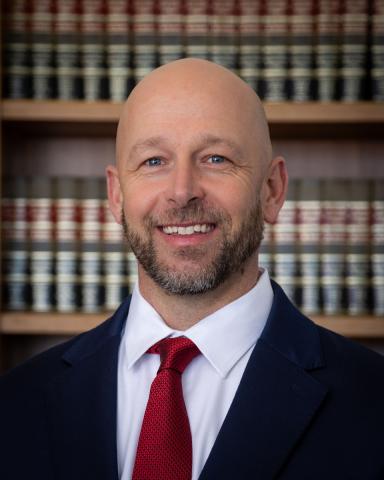
After 20 years in the U.S. Army, second-year Baylor Law student Casey Stege has transitioned from the armed forces to studying case law and establishing community ties. In this episode of Counseller's Corner, Casey discusses how his service influences his journey—from working at a small-town newspaper to joining the Army, and now attending Baylor Law. He explains his desire to become a trusted community leader and shares insights on the unique perspective veterans bring to the classroom. He also shares his experience at Baylor Law School’s Academy of the Advocate in St Andrews, Scotland, advocating for fellow service members on Capitol Hill, and maintaining balance through sports and a good cup of coffee. This conversation offers candid insights into leadership, humility, and building a purposeful life after leaving military service.
Watch This Episode on YouTube
TRANSCRIPT
Jeremy
Welcome to another episode of Counseller’s Corner. I'm Jeremy Counseller, Dean of Baylor Law School. And today, I'm very happy to be joined by second-year law student Casey Stege. Casey, welcome to the podcast.
Casey
Well, thank you, Dean Counseller. Thank you for having me.
Jerremy
And how are you doing?
Casey
I'm good. You know, we're about a week from finals.
Jeremy
That's right.
Casey
As we tape this, so…
Jeremy
I appreciate, I appreciate you taking the time and under those, under those circumstances.
Casey
Absolutely.
Jeremy
So, you are a person, like many law students who had a career before coming to law school. Tell us what that was.
Casey
I did, well, a couple of careers, but I spent 20 years in the Army. I enlisted in the height of Iraq war, 2004, and just kind of on a whim and kind of see if I liked it. And I really loved what I was doing, and I loved the serving with the people I served with.
So, I served 20 years and, when I was come to retirement, I didn't know what to do.
Jeremy
So, so you are retired now from the Army.
Casey
I am.
Jeremy
Okay. And you retired, I think, as a sergeant major.
Casey
I was a first sergeant, actually.
Jeremy
First sergeant.
Casey
I, I did that my last two years as a sergeant major.
Jeremy
Okay. Very good. And what made you, obviously if you're in the military, you're serving. What was it that, that made you think about law school or some, something else?
Casey
That was mostly the decision like the, the deciding factor. First, we zeroed in on wanting to come to Texas. My wife, actually, is from Hewitt here. So, we wanted to come to Central Texas.
Jeremy
And so, she's good people. I know, I know.
Casey
Oh, yeah.
Jeremy
Yeah, yeah.
Casey
She'll tell you the same about me, Yeah, it was it was a lot of service. And I think, I kind of. I don't want to say I aged out of the Army, but, you know, in a lot of sense, it is a young man's game, young person's game. And I wanted to continue to serve my community and be like, establish roots in a community.
And I think, if you think of, kind of like a country lawyer, that's kind of how I envision nowadays, like being an upstanding member of my community.
Jeremy
Yeah. So, is the, is the plan, given that your wife is from Hewitt now you know, Hewitt is just a little suburb of Waco. Is the plan for you to be here in the Central Texas community long term?
Casey
Potentially. Hopefully. You know, we did buy a house here, and we have made some good friends here, and we really enjoy Waco. It's the kind of a lot of hidden, hidden gems here. So, if it works out that way, yes. And we're still open to kind of like Central Texas corridor is yeah, kind of where we want to be.
Jeremy
Well, it's a great place to be. I mean, I've, I've really enjoyed being here for over 20 years, so I, I recommended highly. You, I think I have this right, that you your undergraduate degrees from New Mexico State. Is that right?
Casey
Yes.
Jeremy
So, did that happen before you joined the Army or?
Casey
It did. It did. So, I, I studied journalism at New Mexico State. And I moved back home to work at my hometown newspaper.
Jeremy
Where is that?
Casey
In Las Vegas, New Mexico.
Jeremy
Okay.
Casey
Which is also a small town. And pretty quickly, I realized there wasn't a, no real opportunities for money, and it's really hard to move up. And even at that time, newspapers were kind of a dying industry. And I, it wasn't the quickest way out, but it was a way out.
And it was something I was very interested in.
Jeremy
The Army.
Casey
The Army. So.
Jeremy
Okay.
Casey
So yeah, I graduated and then enlisted a year later.
Jeremy
And you're, there's a small, but it seems to me pretty tight knit community of military veterans and active-duty reserve here at the law school.
Casey
There are. There are, there are some really good people, a lot of, different experiences, different branches. One of the, the service members, she just graduated in, in November was Laura, and she was in the Space Force, and she was the most helpful person when I got here. So, yeah, it's, it is.
Jeremy
I think I remember seeing you at her graduation.
Casey
I was. Oh, yeah. Yeah, her and her and another guy, Chris Martino, who are good veterans.
Jeremy
Yeah. Chris Martino. Yeah, absolutely. Yeah. Well, the veterans enrich our community here, just in very special ways. And one of the things that we have always tried to do with the law school is try to connect the rule of law and the people who are willing to defend the place where the rule of law can thrive.
Jeremy
And so, the U.S. military and your service is much, much appreciated by us here. And we, we love having veterans as part of our, our community.
Jeremy
Okay. You have done some things while in law school that I want to talk to you about, okay? One of them is the Academy of the Advocate in Saint Andrew's. I think you were there last summer.
Casey
I was.
Jeremy
Yeah, okay. Tell me what course you took there. And about that experience generally.
Casey
I did the Academy of the Advocate, the basic one.
Jeremy
Trial school.
Casey
The School of the Trial. It was a fantastic experience. I, I, I think I grew in those two weeks. You don't, it doesn't seem like you spend a lot of time in class, but I think with the professors that are there, the practitioners, the judges providing feedback, I think from day one until day ten, I guess that would be, I think I grew a lot.
I learned a lot. And it's a little more informal way of, kind of being able to pick the brains of some of these very experienced attorneys. So, it was, it was the best experience I've had so far.
Jeremy
What sort of things did you do for fun while you were there?
Casey
Me and another student we went to, we, you know, you have a break in the middle.
Jeremy
Yeah.
Casey
Three and a half days, and we went to London on the way to Bovington, which is a tank museum in South England. And they have a live tank display, and they kind of do a show. And it was something he wanted to do, and I kind of tagged along, and it was really, it was really fun.
Jeremy
Were tanks any part of your experience in the Army?
Casey
I worked around them a lot. I was actually, I was at Fort Hood, which is, you know, an hour, hour and a half away.
Jeremy
Cavazos now.
Casey
Well, they, now they're back to Hood.
Jeremy
Now it’s back to Hood. Okay. I can't keep track.
Casey
Changes with the political winds.
Jeremy
Yeah, I guess so.
Casey
I worked with them, and I'd rather walk, I think, than ride around in a tank, but. Yeah.
Jeremy
But still, you wanted to go see tanks while you're in...
Casey
Well, yeah, it's a museum. And they have tanks from like when they, when tanks were kind of first introduced to the battlefield in, like the end of World War I. And, they have tanks that still run from World War II that they show off. And so, it was it was interesting, I guess.
Jeremy
Any, any restaurants that you enjoyed while you were there?
Casey
Little Italy in, in Saint Andrew's was probably the, my favorite.
Jeremy
We used to not tell people; we faculty used to not tell people about that restaurant.
Casey
Yeah, I probably spent too much money.
Jeremy
Yeah, yeah. On food, it's easy to do.
Casey
But it was good. That was. Yeah, certainly.
Jeremy
The great restaurant. I look forward to that one in particular. Yeah. Every year. Okay. There's some other things you've done. My understanding is you were selected for the Veterans of Foreign Wars of the United States and Student Veterans of American Legislative Fellowship. Tell me about those.
Casey
Yeah. So that was in 2024 is when I was selected. And it's what the fellowship is, is, it's a, you're paired with the VFW representing the Student Veterans of America. And we were advocating for a bill, called the National Guard and Reserve GI Bill Parity Act. And it really supposed to be grassroots advocacy.
And I ran, I learned a lot once again, but ran into some hiccups. But we were able to talk to congressmen, go to the, the Student Veterans National Convention and, and kind of network with Student Veterans Association chapters from across the country. And the bill did not, has not passed yet, but it, we're still hopeful that it will. Yeah.
Jeremy
So, so did you have to go to Washington, DC to…?
Casey
I was unable to go because of LARC III Moot Court but that was part of the plan, but there was no way around it. Yeah.
Jeremy
You had a moot court competition here? Okay. Yeah. How'd you do?
Casey
I did not make the break.
Jeremy
Okay. You should have blown it off and gone to DC. No, I'm kidding. You shouldn’t have done that. You did; you did the right thing. All right. The other thing that you do is intramural basketball here.
Casey
Yeah.
Jeremy
So, talk about intramural sports at the law school.
Casey
Well, I think it's, it's done really well. It's, it's not too serious, but can, some of the games can get too serious. But I think it's a good way to put something on your calendar to go have fun. I think it's easy in law school to kind of get wrapped in finals or coming up or I have to do this, write this motion for summary judgment or read for this class.
But if you give yourself a couple hours, it kind of forces you to do it. And it's been really fun. I've, I've, I've met a lot of good people playing basketball, and you kind of see who, who can play and who can’t. And sometimes it gets a little, a little competitive.
Jeremy
Yeah. Oh, I'm sure it does. Yeah. Do you have referees or you just call your own fouls?
Casey
Call your own fouls. And then sometimes Katherine Sims will be there to adjudicate. Which is, it's all you need.
Jeremy
Yeah. Well, what could go wrong? Calling your own fouls among, among law students. So here you are in your second year of law school. What sort of courses are you taking right now?
Casey
So currently I'm in business and state issues in environmental law, remedies, individual liberties, administrative, federal administrative law and regulation of health care professionals, and client relations.
Jeremy
That's a lot.
Casey
It's a lot, yeah, a lot.
Jeremy
I'm, I'm curious. We talked a little bit maybe staying here in the Central Texas area. What sort of legal career do you think you want to have? You mentioned country lawyer, but which that, that has a certain appeal I admit to me as well; but what do you, what do you think you see for yourself in the future?
Casey
Well, so, I have, after the transactional quarter, which I had last year, I've kind of, really interested in a transactional career. But I also realized that, we'll say, I'm about to go on a practice court, so that might change some things. So, I think I kind of want to be able to do a little bit of everything.
And I think the, the goal of coming to law school and being an attorney is to be a respected member of my community and also be able to provide for my family. So,
Jeremy
Yeah, sure.
Casey
Those are the two main considerations that, that I have. I'm not really interested in the big law hours in the big law career.
I've worked 80 hour weeks before, and I'm not too interested in that, so.
Jeremy
Yeah.
Casey
I know I'll accept that there are, there is a possibility that will happen sometimes, but not all the time.
Jeremy
So yeah, when you when you say a respected member of the community, what does that, because I, that, I think I hear what you're saying but what does it mean? What would that involve?
Casey
Well, I think as, especially as an attorney, someone that the people in your community know that they can call, and they can trust what you're saying. They'll trust that you'll do the right thing, and they'll trust that you give them honest counsel. I think that's like the starting point as far as being in a career like that can be as high profile or as consequential as an attorney.
I think that's kind of the starting point, is being someone that people in your community can call, and they trust that what you're saying and what you're doing is in their best interest.
Jeremy
Yeah, I think I hear a little bit of this in your other answers, but I'm wondering what 20 years in the Army, what you brought with you to law school that you think is helpful or maybe not helpful, what?
Casey
I think the things that are not helpful, we'll start there, because that's kind of the easiest one for me is I think, it's I came from a position where I was I knew everything that was happening, and in a lot of sense, I was the person, like, dictating how things were happening or when they would happen.
And then coming out of that to going back to kind of have to be a better follower and kind of, being responsible more just for myself and beyond. Besides like the, the people that I was like in charge of in the Army or I wouldn't say in charge, but that I served for in the Army, I think the hard, that's the hardest part for me has been kind of, I'm only responsible for myself and there's no excuses.
Jeremy
Yeah, it's a mindset change.
Casey
It is.
Jeremy
Yeah.
Casey
It's huge.
Jeremy
Yeah.
Casey
I think the best things I've brought from the Army is a work ethic. And even if I'm not understanding it all, I'll do my best to figure it out. And just kind of keep grinding away at it. And I think, that's, that's the best kind of trait I've brought from, from my Army service.
Jeremy
That's great. Okay. We have come to the lightning round. Questions are silly. Answers have to be short.
Casey
I've seen before.
Jeremy
Okay, what's a simple habit that instantly improves your mood?
Casey
Drinking coffee.
Jeremy
Comfort food you could eat any time?
Casey
Lasagna.
Jeremy
Go to activity when you have an unexpected free afternoon?
Casey
Golf.
Jeremy
Would you rather live in a bustling city or a quiet small town?
Casey
Quiet small town on the edge of a bustling city.
Jeremy
There you go. What's a song that instantly takes you back to a specific memory?
Casey
Anthony Hamilton “Cool”. And that's my wife and I, we've taken some dance lessons. I've not taken very well to it, but that's kind of the song. We practiced things.
Jeremy
Okay. Great.
Casey
Yeah.
Jeremy
Best spontaneous decision you've ever made?
Casey
Going on a date, on my first date with my wife.
Jeremy
What's the last show you binge watched?
Casey
Landman.
Jeremy
Favorite movie soundtrack?
Casey
“Last of the Mohicans”.
Jeremy
Good answer, good answer. Casey, you passed the lightning round. I understand you have a question for me.
Casey
I do have a question. Now, with a qualifier. Okay. Everyone wants to know the story about the Land Cruiser out there or that Land Rover.
Jeremy
Land Rover.
Casey
Rover. Discovery out there. Okay, but my question…
Jeremy
What, what, what is that question?
Casey
How old is it? When are you getting a new one?
Jeremy
The question is, why do you drive a piece of junk? That's the question.
Casey
Just when you get a new one, I think is…
Jeremy
Yeah, Okay, I'm going to, I'm going to answer that. I am cheap. I don't like spending money. I don't need to communicate anything to anybody based on the car I drive.
Casey
Yeah.
Jeremy
And that vehicle has a mission, and the vehicle's mission is to get me from my home to this parking lot. And that vehicle can achieve that mission at a low cost.
Casey
I agree completely.
Jeremy
Yeah.
Casey
You see my truck?
Jeremy
Yeah, I have, and I just, it doesn't… Now the vehicle is coming to the point where it, it is, it is giving signs that it is it can no longer achieve that mission for much longer. So, I think I think something will change on that front in the next, let's say, year. But I actually, the car I had before that one was a Honda Accord, a very old, even older than that Honda Accord. And I regret getting rid of it.
Casey
Yeah, I understand completely.
Jeremy
Yeah.
Casey
Speaking of change.
Jeremy
Nice. Nice segue. Nice segue Casey. Very good.
Casey
If you had a magic wand to change one part of the Baylor Law experience starting tomorrow, what would you change and why?
Jeremy
I know, I know exactly what I would, what I would do. I would make Baylor Law School such that no student had to pay a dime of tuition to come here. That, that is... But you know we, we provide very significant scholarship funding. But still, law school is a significant investment for most students, and it's not only what you may pay in tuition, but you're giving up things. Right?
You're giving up. You're giving up three years of being able to work another job. And so, anything we can do to improve affordability, particularly because I deeply, deeply believe in what we do at Baylor Law School and the value we provide students. And I just wish that the, the money wouldn't be a barrier for any student to come here.
So, if I had a magic wand, that's the wand I would, I would, I would wave it in that direction for sure.
Casey
Awesome. Well thank you. That's a, that's the answer I was hoping for.
Jeremy
Thanks Casey. I appreciate that. Been, been great and appreciate you taking the time. Yeah. Especially the week before finals.
Casey
Thank you very much.