From Touchdowns to Transactions: Garrett Welch’s Baylor Law School Playbook
From Touchdowns to Transactions: Garrett Welch’s Baylor Law School Playbook
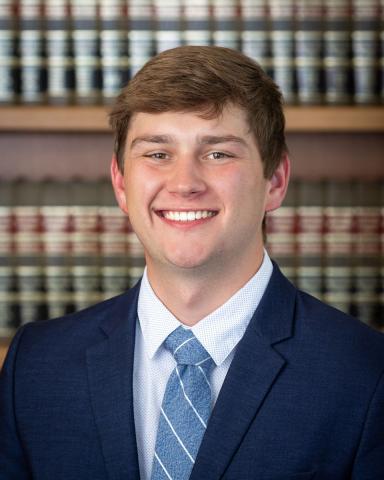
In this episode, Dean Jeremy Counseller sits down with Garrett Welch, a 3L with a love for contract clauses and competitive flag football. Garrett shares how his background in finance and business led him to the transactional side of the law, why tax law is (surprisingly) fun, and how Baylor’s competition teams helped him bridge theory and practice. They also talk studying strategies, intramural sports, and Garrett’s post-grad plans in Houston. It’s a conversation about finding your lane—and running it like it’s 4th and goal.
Watch This Episode on YouTube
TRANSCRIPT
Jeremy
Welcome to Counseller’s Corner. My name is Jeremy Counseller and I’m the dean of Baylor Law School. And today I am joined by Garrett Welch, third year law student here at Baylor Law School. Garrett, welcome to the to the podcast. You have recently completed the famous slash infamous practice court program, and I'm wondering how you're feeling now and what must be your final or one of your last terms here in law school.
Garrett
I'm feeling great at, you know, I've never been so relieved to show up here at 8 a.m. and have to go to class. It feels, you know, there's no weight anymore on my shoulders. Just trying to, you know, finish strong and, and get to the summer. Start studying for the bar there. So, you know, it never ends really.
Jeremy
Yeah.
Garrett
But that's what practice court prepares us for. So. Yeah, I'm not feeling too worried about it. Thanks to you and all the things we learned.
Jeremy
You know, I want to come back to the practice court, but, but I want to talk to you about kind of the journey that brought you to law school. You've, you've got an interesting background in the sense that I think you, you worked at the federal defenders, or the Department of Justice for Detention Services, but you've had here in law school a real focus on business and transactional law.
Jeremy
And so, kind of tell me about the experience before law school and then your decision to really sort of focus on business and transactional law.
Garrett
Yes. I think I always had, an interest in the law. And I've always loved history and politics. And so, I kind of, in the back of my mind, knew that I would end up doing something involving law. In undergrad, I originally was an econ major and then switched to finance and really focused on the business side.
Garrett
I worked as at an accounting firm as a business valuations consultant. And basically, just crunched numbers on Excel and was kind of all in on doing that. But then, you know, as it as we kind of, as I spent more time there, I realized that the lawyers that we were working with on these transactions, that they were doing the, you know, pulling the strings or they're behind the scenes.
Garrett
They were quarterbacking the deals. And they were, you know, playing the logic games to figure out how we need to set up the business entities or how we need to structure the transaction, to get the best deal for our clients. And I really thought that that was more interesting than, you know, the in the trenches crunching the numbers and said, you know, decided then to, you know, kind of pivot and go to law school, which, you know, fit what I had originally always kind of wanted to do.
So, you came to law school knowing that you wanted to have a business and transactional law practice when you, when you finished?
Garrett
Yeah. So, I think that would have been different maybe when I was in high school. Maybe I would have thought I would have been a litigator or wanted to, you know, eventually be a judge or something. But I think in college I really, kind of realized that I, I loved, you know, business and, and helping businesses, succeed.
Garrett
And so, in law school, I always felt that I was going to do transactional.
Jeremy
Yeah. So we have a quarter term in law school is really devoted to transactional law, kind of the foundational courses, biz org tax, trust in estate. You've got some experience with deals and finance. When you got to those courses, how did you find them? Were they eye opening or were they very were they really, really different maybe than what you expected them to be?
Garrett
I think it was it was both very different from what I expected coming from, the accounting and finance world. But also, I really enjoyed it. I think, you know, a lot of people may say the business, or the transactional quarter is worse than practice court. But I loved it being there 5 or 4 days a week
Garrett
learning about business organizations, trust in estates and especially tax because I love math. And so, you know, we were learning more of the background of what builds transactional law rather than, you know, how dealer, or how deals are priced like we do in accounting and finance. But you know, still really enjoyed it.
Jeremy
So, you have a really significant and successful track record on competition teams. And I think when a lot of people, maybe people who are looking forward to law school, think of competition teams, you know, where different law school sends, send teams to competitions, they think about mock trial, they think about moot court and of course, there are lots of teams like that.
Jeremy
We certainly have lots of them. You have, sort of excelled in the transactional law competition teams. So, talk about your experiences on those, on those teams.
Garrett
Yeah, and I, I also enjoyed moot court when we had to do it in our third quarter. I really enjoyed making those legal arguments. And in some ways, transactional teams are like that because it's, you're typically negotiating with other attorneys on the other side. And so, you're, you're arguing the legal points of the deal. And so, in that way that's similar to moot quarter and somewhat to mock trial as well.
Garrett
But you're also on the front end, you're drafting contracts. And that is very different than litigation drafting. And so, then you're taking a contract usually that's already been drafted or a form and you're, you know, tailoring it to your client's needs. And so, I, I think that it's a little bit of a different skill. But those are, especially here at Baylor, where we have Professor Page and Professor Smith who are really good, transactional lawyers.
Garrett
They do a really great job of teaching us those skills. And I think that's obviously helped us to be successful at the competitions. But then those skills that we learned here in terms of advocacy, which are typically most people are learning those to go and be litigators, but we're using them and applying them at the negotiation rounds of the transactional competitions.
Garrett
That's really helped us to, to succeed there.
Jeremy
So, a lot of I think a lot of students, when they participate in a, in a competition team, whether it's moot court, mock trial, a transactional competition, they have this experience of the light bulb sort of goes off. They see how everything connects. You're drawing a connection between advocacy, training and dealmaking. I wonder if you had that experience where you've felt maybe it was, that that the competition team was an integral part of your education and your training?
Garrett
I mean, I think so it, it really gives you, it's the practical side of what of learning the law. Like, you can learn the statutes and you can memorize the statutes, but you don't really know what the statute does until you go into a competition, and you try to apply it to your, to the deal, right. And so, yeah, I think that really helps you learn how it actually works.
Garrett
And so, and how to apply it.
Jeremy
Yeah. Just kind of stepping away from the transactional piece, what advice would you give to a student who's thinking about law school, maybe, maybe Baylor Law School, but just the law school in general, about how to be successful I guess in law school. However you define success, what advice would you give?
Garrett
I think, I would say for sure you should know you want to go to law school. I think, I mean, everything can be easier or tougher based on if you really enjoy it. And so like, I really enjoy the law. I like, learning. Even I want to do transactional law, but I love learning about constitutional law or appellate, appellate litigation.
Garrett
But, you know, if you enjoy it, I think that is, you know, the first step in being successful. And then I think learning how you study best, is really important. Like, I'm not really a 9 to 5 study person. I enjoy being at home. I like to listen to things while I study, which I think is probably, you know, other people would really, would really hate.
Garrett
But, you know, I study I, it keeps me from getting bored. And so, I'm constantly, you know, learning things on the side, but also, learning, you know, practicing what we're learning here. And so, I think that helps me to stay fresh while I'm learning. But you also have to know, I think, when it becomes essential to kind of buckle and or buckle down and and just focus on class.
Garrett
And so, there are times when you're going to have to, you know, be there 12 hours a day, be here 12 hours a day studying and just going over what you've learned in class. And so I think just learning how you study best and when to really buckle down is, is important.
Jeremy
What have you learned about, I mean, I feel like I really learned to study in law school. What do you what did you learn about being an effective studier in law school, if anything?
Garrett
Yeah. I, I think it's, it's kind of that it's, it's when you need to do certain things because if I, I think if I started in week one, spending 12 hours a day doing nothing but memorizing statutes and cases, I would get burnt out too easily. And so, I think being able to split that up with free time, hanging out with my wife, hanging out with friends, and just keeping me fresh for the week to week, is really helpful.
Garrett
But also, you know, carving out certain amount of time, carving out a certain amount of time for the law, right. Or for, you know, class, that help once you get to the time when you need to buckle down and, and do that for 12 hours a day, it's you're not really learning it or you're not learning it.
Garrett
You're just now you're just refining your skills. And so I think but you're also not burnt out because you weren't you haven't been going and going and going the whole time.
Jeremy
Well, and it's particularly important to strike that balance because you've mentioned you have a wife. Right. So you, you know, you've got responsibilities outside of your own self. And so it's important to keep that balance. One way that you have kind of struck a balance, my understanding is you have participated in a lot of, intramural law school sports teams.
Jeremy
Talk to me about that.
Garrett
I have. That was in high school. I played football and baseball and then in undergrad, I played softball and intramural basketball and flag football. And it's just, you know what I love to do. I've always, always loved sports. And so, and it's the best way, I think, to bond with people and to make friends is to be out there, you know, competing and kind of getting chippy with each other.
Garrett
And, having some healthy arguments while you're on the football field. So, yeah, any time, even during practice court, anytime, there's the, we have law school intramurals available, I'm there. It was basketball and flag football this year, and we almost, I think we lost the championship in flag football. So yeah, we had a had a good had a good season.
Jeremy
Let's. That must be really disappointing to come that come that close. But, but you said you know getting chippy on the on the field or the court. Do you feel like law students tend to get chippier or and argue over things more so than undergraduates in, in intramural context?
Garrett
Actually, no. Probably not. And I think there's also, you know, this is more in some ways more, a much more professional environment, I think. And so, it also feels kind of ridiculous when you start arguing on the football field with, you know, other people who are going to be attorneys. So, I think, you know, we have at least some sort of professionalism about us, you know, not to burn any bridges while we're on the football field.
Jeremy
Yeah, well, that's good to hear. That's, that's good to hear. I'm surprised to hear that. But, but it's, it's very good to hear. Okay. We are now moving to what is called the lightning round. Okay. And I have to pause there. All right. Here we go. Answers have to be short.
Jeremy
Okay. If you could have dinner with any historical figure, who would it be?
Garrett
Richard the Lionheart.
Jeremy
Okay. Forgive me. These are, many of these are food related, but that's who I am. Best meal you've ever had. And where?
Garrett
I love charbroiled oy, charbroiled oysters. And Phil's in Baton Rouge has really good charbroiled oysters.
Jeremy
Favorite childhood TV show or movie?
Garrett
I loved the Lord of the Rings trilogy. I watched it constantly.
Jeremy
It makes me feel old that that was a childhood movie for you. Favorite dining spot in Waco?
Garrett
Waco. Milo. Really good menu that switches all the time.
Jeremy
Good answer. Favorite coffee shop in Waco or some other spot in Waco to hang out with a friend or two?
Garrett
For Keeps Coffee is a great coffee and good kolaches.
Jeremy
Where is For keeps?
Garrett
On Bosque. Like, I guess north Bosque.
Jeremy
Should be pronounced bos-ka. Okay, but it's Bosque (bos-key).
Garrett
And that, it's like north of the Target.
Jeremy
Okay. Yeah, North of the target. All right, I know that area. Favorite board game or video game?
Garrett
Always played the NCAA football games when I was a kid.
Jeremy
You're a sports guy.
Garrett
Yeah.
Jeremy
It's a theme. What's the most adventurous thing you've ever done?
Garrett
Snorkeling in in the Caribbean.
Jeremy
Probably lots of sharks or something in the water?
Garrett
No sharks. Oh, I saw stingray from a distance. It kind of got my heart beating, but nothing crazy.
Jeremy
Well, I understand you might have a question for me.
Garrett
Yeah. And so, I know, as you've come in as Dean, that you've had a little bit or you've asked a little bit of the transactional focused students, you know, what our suggestions may be or what our thoughts are on the transactional program at Baylor. And so, you know, do you have any ideas for how to improve or enhance or grow the transactional program? And if so, what are they?
Jeremy
Yeah. So, you know, Baylor Law School, our ethos is to prepare students for the practice of law. And of course, that includes business and transactional law sort of practice, mergers and acquisitions and the like. And increasingly what I see is students, not only more of our students interested in that practice, those practice areas, but, going into those practice areas.
Jeremy
And I think, you know, if we're going to stick to making sure preparing students for the practice of law as best we can, then we need to do more on, on that front. In terms of what we need to do, I listen to the people who teach in that area. I listen to Beth Miller, I listened to Kayla Landers, I listened to Whitney Holmes, I listened to Michael Smith, and you mentioned Allen Paige.
Jeremy
You know, I listen to the people who are really forefront in that area. What do we need? And so, I think we've done some things that I think are really important. One is, the competition teams that are in the transactional area. Something that we do at Baylor is we try to involve as many students as possible in competition teams, whether it's moot court, mock trial or a transactional law team, because we think it really contributes to their education. I mean, you like, they as you said, it’s the practical part. How do I put this into practice, which is what you’re going to do when you , when you finish law school. And so, that’s something I think is important. And then we’re going to need to add some courses. I mean we’re going to need to make some curricular additions.
Jeremy
I'm really proud of the stuff that we have. I think our business organizations course and our trust and estate's course, in our tax courses are great. We're going to add some courses so that there's more of a variety of things out there, particularly in the elective areas, elective courses that students can, can do. So I wanted to finish this conversation.
Tell me what, you're just about done with law school. You mentioned the bar exam. Tell me what you plan to do after that.
Garrett
Well, I think timing, timing wise, we're going to go on a trip before the bar.
Jeremy: Where are you going?
Garrett
And I think we're going to go to Scotland because I missed the Scotland trip with school last year, which I would have loved to have gone on. So I think we're going to try to do that by ourselves this summer.
Jeremy
That's awesome. And then once you take the bar and pass the bar exam, where are you going after that?
Garrett
I will be in Houston at Hogan Lovells. So I'll be getting ready to start my practice.
Jeremy
And what kind of practice are you starting?
Garrett
It'll be in their corporate group, and so we'll be doing mergers and acquisitions, project finance, that kind of thing.
Jeremy
That's awesome. Garrett, you're going to be a great lawyer. Thanks for stopping by.
Garrett
Thank you, I appreciate it.
Jeremy
Yeah.