London Roots, Texas Trials: 1L Tochi Okoli's Path to Criminal Law
London Roots, Texas Trials: 1L Tochi Okoli's Path to Criminal Law
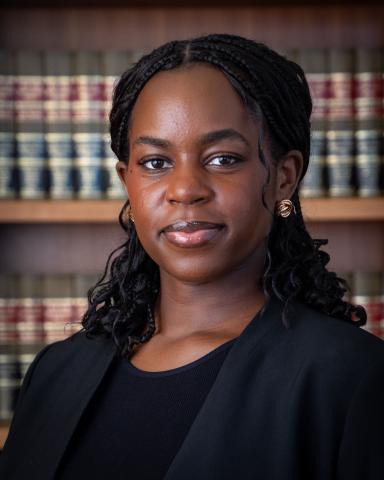
1L Tochi Okoli joins Dean Jeremy Counseller to share her unconventional journey from London to Baylor Law School, including the emotional weight of working on a death penalty case, and why criminal law still calls to her despite everything she’s seen. From analyzing bodycam footage to breaking out of boarding school, Tochi shares a vibrant, deeply human story about resilience, purpose, and a little bit of suya. Whether you're in law school, thinking about it, or just love a good origin story, this episode will leave you inspired — and maybe craving some jollof rice.
Watch This Episode on YouTube
TRANSCRIPT
Jeremy
Welcome to Counseller’s Corner. My name is Jeremy Counseller. I'm the dean of Baylor Law School, and I'm very pleased today to be joined by Tochi Okoli, whose finishing, finishing up now her first year of law school. Welcome Tochi. How are you doing today?
Tochi
I'm doing well, thank you. How are you?
Jeremy
I'm doing well. I, one of the, one of the two of us has an accent. Maybe both of us do. Mine comes from Humble, Texas. Where does yours come from?
Tochi
So. London, England? Yes.
Jeremy
Okay. So here you are, Baylor Law School, Waco, Texas, originally from London, England. Tell me about the journey from London to Baylor Law School.
Tochi
Yeah. So, born in London in 2000. Grew up there, moved to Nigeria for two years when I was, ten to the age of twelve, went back to the UK from the age of twelve to sixteen, came to America at sixteen, and then moved down from North Carolina, where I landed, to Houston for my undergrad and then came here after.
So that's kind of my bounce about.
Jeremy
Something I know about you is that you went to boarding school while you were in England.
Tochi
Yeah.
Jeremy
Tell me about boarding. So you went, I think, at age twelve to sixteen, in England. How, how is boarding school and is going there as terrifying as it seems, it would seem to me at twelve years old?
Tochi
So, I think looking back, it was a little daunting just starting out and not being around. I, of course, I was with my sister, but I didn't have my parents with me or anything like that. First time being away from home. But looking back on the entire process, it was. I absolutely loved boarding school.
Like I loved being around my friends who became my family because I spent all my time with them, from like sporting events and at the time, so, in England, when at least in the school I was in, they would take trips to museums or castles or things like that, and those were mandatory. So, all these like historical, like the formative social experiences as well, that a lot of people wouldn't have had the opportunity to partake in, because you go through a lot like a castle on your regular time, I got to do these things.
So definitely daunting just being away from home. But, you know, you learn how to be an individual. I learned how to do my laundry. I learned how to manage my time or, you know, even just, like, hygiene things, those things you kind of have to develop on your own with some guidance from adults.
But it's really down to you, to be, take ownership of those types of things. So, I would recommend boarding school to everybody. But yeah, loved it.
Jeremy
Did they, did they sort you into houses in your boarding school like Harry Potter?
Tochi
So
Jeremy
I know you're not a Harry Potter person, but -
Tochi
Yeah, yeah. So by houses you mean like, like competitive houses? Yes. So I was just talking about that today, actually. So the school I went to, our patron is Princess Anne. So because the royal family was such a big part of the school, our houses were named after the castles. So I was in Balmoral. There was Buckingham, Sandringham?
Jeremy
I love Balmoral.
Tochi
Yeah. That was. Yeah.
Jeremy
That’s in Scotland.
Tochi
We, I… Go Balmoral. So, Yeah. And then. Yeah. So, we had houses. Yeah.
Jeremy
Did they use a hat to sort you into houses? Like place a hat on your head, and then it announced the house that you were in?
Tochi
Unfortunately, no. We did not have. But, but we did have, like as part of our uniform, we had these straw hats and then we also had tippits. So there, like I would say like bo...
Jeremy
Tippits?
Tochi
Yeah. It's like in America, like the cowboy tie.
Jeremy
Oh gotcha, the bolo tie.
Tochi
Bolo ties.
Tochi
They look like that. Yeah. And they strangle you. So. And if you pull them, they snap right back into your throat. So. But we used to do that to each other. Sorry everybody. But, no, yeah.
Jeremy
So, I also, from talking to you before, I know that part of the reason you were excited to come to the United States is because you grew up on American television. I'm wondering how reality matches the television shows that you watched as a kid.
Tochi
For me personally, my school experience did not match that because, as I told you, I went to an all-girls boarding school in Winston-Salem, North Carolina.
Jeremy
From sixteen to eighteen. This is after the English boarding school.
Tochi
When I came to, so American boarding school, very, very different from UK boarding school. A lot more liberties that we did not have over there. But because of that, I didn't do like the pep rallies, the football games, the, homecoming, things like that. But public American high school very much aligns with like the, the TV show-esque thing that I was chasing, but no, I didn't do.
Jeremy
What about it aligns with, is it...
Tochi
It's just the bigness. Everything in America is big. It's large and grand, you know? And like, there, in my graduating class, there were like 25 of us. But you have graduating classes in America that are like 500 students, like thousands of students. Like, you have to rent out a football stadium just to, you know, matriculate a class.
I think that's so amazing because you just don't get that in the UK. So that's, that bigness, you know? Yeah.
Jeremy
Okay. So, part of something that I see in your kind of a journey leading up to law school, before law school is advocacy. And I think you've worked on some, causes related to children in Nigeria. Can you talk to me about that?
Tochi
Yeah. So, the year before I, or the summer rather, before I went to undergrad, I was in Nigeria and I did a constitutional law internship in Nigeria. And really it was focusing on the roots of corruption. So, this is something I'm really passionate about because Nigeria used to be a force to be reckoned with economically, socially, politically, and for various reasons, the government has just been so destabilized.
And so, I wanted to understand the roots of that destabilization. What allowed corruption to enter the government and just dismantle all forms of structure? And so, I was looking at the root of that, which was really the, you know, the pulling out of colonial powers in Nigeria, which unfortunately is the UK, but you know. But really just leaving Nigeria with all forms of, just removing all forms of structure, all forms of governance, drawing these strange boundary lines for Nigeria, and incorporating a group of people that come from different countries, have different roots, different, speak different languages.
In one Nigeria, you have over 200 languages spoken. And the only reason why that is so is because of just, an intention on behalf of colonial leaders to create division where, where-soever possible, force a group of people to live together in one land, when those people just are not tied in any way. And so, because of that, when you remove that colonization, you're left with a group of people that just want to empower themselves and their people and have no harmony, no balance, no, no anything.
And so, I was just kind of researching the, the history of that, looking at how that impacted Nigerians in the modern day. And really, unfortunately, it only is devolving into, a worser reality for many Nigerians. It's a very, today a lot more young people are crying out, which is a really good thing. But it's not getting any better.
So yeah.
Jeremy
Did that experience have anything to do with your decision to go to law school working on those issues?
Tochi
It did. I'm very interested in international relations, and I have a goal. I've given that goal to God because I don't know how I'm going to accomplish that goal, but I just want Nigeria to, to get back to that place of being a force to be reckoned with. Yeah. So, I just want to understand how to advocate.
Right now, it's on a smaller scale obviously, because it would be advocating for clients, but I want to know how that advocacy for individuals translates to advocating for a people and bringing back harmony to people. And really of people who were never supposed to live together in the first place, how do you create that balance? That it's a big goal, but we'll see where that takes me.
Jeremy
But that's kind of your why or your inspiration for going to law school.
Tochi
Yes.
Jeremy
So, let's, you're, you're heading towards the end of your first year in law school right now. How has your first year of law school maybe been different than what you expected it to be?
Tochi
I went into law school thinking I was going to read statutes all day, and that's a common, I think, idea from many people who go to law school. I didn't realize how much my mind was not yet trained to think like a lawyer. I didn't really even know what it meant to think like a lawyer. Apart from this broad phrase, which is analytical thinking.
But what does it really mean to think analytically? And I think my exams, my professors, my peers mostly have shown me the gaps in my understanding and have helped me fill in those gaps to understand what I haven't. What maybe when I read something, I'm not analyzing immediately, whereas other people are picking up on it and it's making, it's really trimming me and it's, it's… I'm hungry to see those things.
I'm hungry to think more analytically like my peers do. So, I, I always heard that, you know, law school is competitive, and I anticipated that, but I didn't anticipate how much that competition was actually going to refine me and make me a better thinker and make me a better, you know, perspective lawyer.
Jeremy
It really, to your point, it really is. law school really is, I think, legal education. It really is a transformational education of the person who undertakes that journey. And I think one thing for people who listen to the podcast, who maybe are thinking about law school, is, and we say this, is that it's especially the first year of law school, is not principally about the acquisition of knowledge.
It's about the acquisition of skills. You know, how to think like a lawyer, how to communicate like a lawyer. And it's that piece, I think the, the expectation that I'm going to learn a bunch of stuff versus acquire a lot of skills. That juxtaposition, I think, is what comes as a surprise to some, some students as they go through the process, particularly in the first year.
Wondering what you look forward to about law school? What, what else? I mean, you've gone through the moot court competition recently. You're finishing up your first-year courses. What are the things on the horizon about law school that you look forward to?
Tochi
I think that I look forward to breaking a lot of the molds that I put on myself that have not allowed me to do certain things that I've wanted to do. So, for example, I would say I'm a very shy person. Being in law school has made me realize I can't afford to be shy. I can't afford to shut myself down before I've given somebody else the opportunity to say yes or say no, because I just wouldn't be successful.
You know, it's, I'm, that I'm just looking forward to see, seeing how I transform as an individual. Even when it comes to self-advocacy, because of how shy I am and because of how, you know, there are certain perceptions of, you know, individuals, just from the outset, I have, I've never wanted to conform to certain perceptions that people have of, you know, just different, different things that society places on people.
So, I've, I've led a lot of things slide that have impacted me in, up to this point in my life, and I'm getting to a point where I'm like, no, you do, I deserve better. And how are you anticipating advocating for other people when you can't even advocate for yourself? I'm very, very excited to come out on the other side of that and just see how, how I end up as a person.
Jeremy
It's so interesting. Students, so many of them, some sitting in that chair where you're sitting now and others in other contexts who tell me I'm a shy person.
Tochi
Yeah.
Jeremy
You know, but meanwhile they're doing these things that maybe would astonish a shy person that they're doing something and they're shy, you know. And then also I think a lot of people, is not uncommon at all for, I can advocate for this person but advocate, advocating for myself as something different.
Tochi
Right.
Jeremy
You know, but that is a lesson we all have to learn - how to effectively advocate for, for ourselves.
I think those are those are good objectives for, for you to have as you move through law school. Although I anticipate that that process may take longer than law school, will continue to develop on that front. I know in my own life and career; I'm still a work in progress on those fronts for sure. One thing that I noticed that you did, and I think this was in Houston, you, worked at the district attorney's office and going back to the advocacy piece, what kind of work did you do there?
And why did you want to work at the district attorney's office?
Tochi
So, I've always been really interested in criminal law. Started from my mum, who's a massive fanatic for true crime. After working at the DA's office, I cannot watch true crime, because I worked in the major offender's unit. So, I worked with the murderers and things like that. And I worked specifically on capital cases. That was a just a random assignment, but, I loved, loved, loved the experience.
In terms of advocating, I worked a lot in, like, evidence processing. I saw the behind the scenes of the, the ADA's getting ready for trial. I got to see the intricacies that are involved in working on a capital case. That might not be the same for a non-capital case. And the, the biggest, I'm not sure if I, the case is finished.
I'm allowed to, you know, refer to it, right?
Jeremy
Yeah. I would just leave names out.
Tochi
Definitely. But the case that I worked on specifically was, a case about a man who killed the first, sick, openly sick, police officer in the HPD, in the Houston Police Department. And so he was, a trailblazer for the community. And he was basically just known to everybody in his community as an amazing man.
And so, he ended up getting the death penalty. And I think just being on the being on the back side of that and seeing the families, seeing the impact, even in the police department as well. And knowing that the little things I was doing, watching body cams, going through phones, going through emails, it had a massive impact on the trial.
The things that I prepared were given to the jury to see, to watch. And so that it just made me excited, because even though I was on the back end reviewing this evidence, I want to be on the front end, too. You know what I mean? Like standing up before the jury really having that oral advocacy. So that's what really pushed me to go into law school.
Jeremy
Is, is that something you think you'll want to do after law school is maybe be an assistant district attorney?
Tochi
Well, yeah. Criminal law is something I'm still so passionate about. The only thing that scares me is what I saw, you know, and I, I, I really enjoyed having access to those things because I think as a society with just very shielded. And we don't want to see things, I feel like many of us should see because some people don't have the privilege to not see.
But I think I would just need a little bit of, of self-preparation for what I would be getting myself into, but I would I'm very interested in pursuing criminal law. Yes.
Jeremy
Yeah. I think I think it's a great option. I mean, especially for somebody who wants to make a difference in people's lives. I mean, you saw it in your internship. It really is a tremendous opportunity too.
All right. So, it's now time for the lightning round. Your answers to these questions have to be short.
Tochi
Okay.
Jeremy
If you could have a meal with any historical figure, who would it be?
Tochi
FDR.
Jeremy
I would love to follow up, but I can't because it's the lightning round. Best meal you've ever had and where?
Tochi
My mum’s suya for Christmas.
Jeremy
What is it?
Tochi
S-Y. S-U-Y-A.
Jeremy
Tell me what that is. I gotta follow up on that.
Tochi
It's, it's a Nigerian like beef, well it’s meat typically, but it has a special seasoning powder, and she makes it perfectly. Yes. Unfortunately, here in Waco, you'll never get to try it.
Jeremy
I can, because I know you, and can get it through your mother I might be able to get some. All right. This one's good for you. Favorite childhood TV show or movie?
Tochi
Oh, Anastasia, the Disney princess movie, all-time favorite.
Jeremy
This is a tough question for someone who's spent some time in the Houston area. As you and I have talked to, we both spent a lot of time in Houston there. Great restaurant town. Favorite dining spot in Waco.
Tochi
Waco, Waco, Waco. La Fiesta.
Jeremy
I thought you were about to say McDonald's.
Tochi
Oh, no. Okay.
Jeremy
Okay, we may have to edit that answer out. What's your, go to comfort food? Why are all my questions food? What's your go to comfort food? Is it suya?
Tochi
No, jollof rice.
Jeremy
Okay. The most adventurous thing you've ever done.
Tochi
Most adventurous thing.
Breaking out of boarding school with my friends.
Jeremy
Okay. Yeah. You broke out?
Tochi
Yes. We did. My sincerest apologies to my house mistress.
Jeremy
Is this known by the boarding school that you did this?
Tochi
It is now known to them.
Jeremy
They didn't catch you at the time.
Tochi
They did not.
Jeremy
Okay. Are you aware? Is there a statute of limitations on that?
Tochi
Yeah. This was about ten years ago, so it must. I have to be safe.
Jeremy
Okay. What's one thing on your bucket list that you haven't done yet?
Tochi
Jump out of a plane. That's so cliche. And I will never do it because I'm afraid of heights, so I don't know why it's on the bucket list.
Jeremy
I'm never going to do it either, so I'm fully behind that. Okay, last one. If you could be any fictional character for a day, who would it be?
Tochi
Fictional character? Mulan. That's another one of my favorite movies.
Jeremy
You're, you're a Disney fan.
Tochi
I definitely am.
Jeremy
I understand that you may have a question or two for me.
Tochi
I do. So, I, as I have been in law school, I've been exposed to more like the of the minds of lawyers, and I've seen the good and I've had the good, but I've also seen a lot of people who, you know, burn out. And many people talk about burnout. But I'm more so interested you as the dean, and you are a professor, and you taught one of my 1L classes. And many times, you know, people got the answers right, and that's great, but people got the answers wrong. Like, I, I'm interested in what keeps you in your love of the law. So much so that you could practice for all those years and still coach people through and teach people through the rudimentary aspects of the law.
Like how do you not lose that passion?
Jeremy
I think. I found a thing to do that; it was right for me. Teaching is right for me. And I think something that's important is, you know, what's the old saying? If you do what you love, you'll never work a day in your life. Well, I get to do something that I love, which is to be in the classroom.
You know, it doesn't. I think students may think that that I or other instructors get frustrated when the answers are wrong, when we call on someone. That's really not true. Particularly if the answer is the result of effort. But it just isn't quite perfect, isn't quite it. Maybe, maybe it is wrong. But if it's the result of effort, I would much rather have an answer the student struggled for that is broken in a helpful way, because you can take that answer and you can correct it, and you can say, here's the part that's not correct about that answer, and let's examine that - why it's not correct.
That is actually, in my experience, a better teaching moment, a better experience in the classroom for other students than for the response to be, Tochi, that's the perfect answer.
And then you just walk away from it because there's nothing to add. There's, there's nothing to emphasize or, or, or correct. Now, I think if students were constantly getting things wrong because they hadn't put any effort into the reading assignment, that would, that would be something I think that could frustrate me and maybe lead to burnout.
But, you know, one of the things I love about Baylor Law School, and I've said this for the two plus decades that I've been here teaching, we get really good students, but I really feel like we get more than our fair share of really good people who are dedicated to trying to become a great professional and who know this is going to take work. And I'm taking it seriously. I love, you know, I remember when I was a law student, I would really struggle through some of the reading assignments. I mean, I remember somewhere I would read them multiple times. I would just say, I have no idea what I'm doing.
Tochi
Yeah. Yep.
Jeremy
And even if I have no idea what I'm supposed to take from this and reading it again, and the same thing in the same thing, I now, from this perspective, the idea of a student struggling with the law alone like that just thrills me, because that's the process that leads to that transformation that I mentioned, I mentioned earlier.
But you know, as far as the profession, like any other profession, we can have burnout. I mean, that's, that's for sure. And I think it's important for me, what I try to do is keep perspective on things. I mean, I serve as a professor here on the faculty, and since July I've served as the Dean. But that's not who I am.
That's part of who I am. I'm a dad. I'm a husband. You know, I have institutions in my life that are important to me other than Baylor, although Baylor is very important to me. So, I think to keep perspective on things is helpful in that regard. Just so you don't, you don't have all your eggs in the professional basket. With that. So. yeah.
Tochi
I do have a follow up.
Jeremy
Yeah. Please.
Tochi
So I think another kind of, going off of what you've said, there's a culture nowadays to go to school for a professional degree, work in that professional degree for a few years, and then get into additional streams of income that don't require you to use that degree. As a successful lawyer yourself, what has kept you wanting to pursue law, even if it's in the academic scene?
Why not anything else, like real estate or just retiring? You know what I mean?
Jeremy
Well, clearly you haven't heard about my tech startup. No. I’m kidding. I mean, I do think one thing that I love about, I've always loved about being on a law faculty, is I get to sort of be the artist of my own career. I mean, look, I've got a podcast here, right? So, there's a variety of things that I can do that keep me interested, keep me engaged.
I'm not making any money off this deal, but, but I, I think that, you know, I, I've stayed where I am doing what I'm doing as a teacher because I like it a lot. I like the people I work with. I like the students that I get to work with. I, and I also really believe in, the institution I work for.
You know, I think that's something that can keep you, focused is do you believe in the mission? And this is not our mission, but our ethos is certainly prepare students for the practice of law. That's part of our mission, is preparing students for the practice of law. I believe in that mission. I believe that what we do here can help you when you are out doing whatever you're doing in the legal profession.
But I think no matter what you do Tochi, you and I would say this to any of our students, you're going to be serving people. And that's really important work that you're going to do. So, what we do here is really important work as well, to get you ready for those future clients, for those future communities that you and all of your classmates and all Baylor lawyers who are, ever were are going to serve. I’m behind that 100%.
I mean, it's just a real privilege. And to be able to think about it's bigger than me.
Tochi
Right.
Jeremy
That's a really big motivator for me that keeps me engaged. Tochi, thanks so much. It’s been a pleasure.
Tochi
Thank you so much.