Justice Without Borders: Dylan Mayne's Summer Externship in Zambia
Justice Without Borders: Dylan Mayne's Summer Externship in Zambia
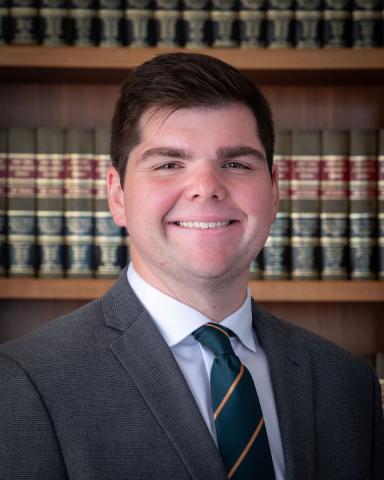
In this episode of Counseller’s Corner, Dean Jeremy Counseller sits down with Baylor Law School student Dylan Mayne, whose summer took him from the Gulf Coast to the heart of Africa. Dylan shares how his Baylor Law Externship in Zambia with the nonprofit Undikumbukire Project Zambia gave him firsthand insight into the country’s justice system and the challenges faced by juveniles without access to public defenders. From visiting prison and mobile courts to witnessing the power of compassion in action, Dylan reflects on how the experience deepened his passion for public service and law.
Listen to This Episode on YouTube
TRANSCRIPT
Jeremy
This is Jeremy Counseller, Dean of Baylor Law School. Welcome to another edition of Counseller’s Corner. And I'm pleased to be joined today by Dylan Mayne. Dylan, welcome to the podcast. How are you doing?
Dylan
Thank you so much. I'm doing good.
Jeremy
Good.
Dylan
So, I originally grew up in Ocean Springs, which is on the coast, right next to Biloxi, for people who might not know where Ocean Springs is. You know, it's…
Jeremy
What about for people who don't know where Biloxi is?
Dylan
Okay, so it's on the Mississippi Gulf Coast. It's about an hour and a half away from New Orleans, just east of it. And then about 45 minutes from Mobile.
Jeremy
And then college was Mississippi State, is that right? And you were in the band there?
Dylan
Yeah, yeah, I played the baritone. Again, I feel like everything, almost everything about my life is very like niche things, but it's like a concert horn. Looks like a small tuba. Very specific for like, marches and things like that.
Jeremy
Explain to me what a Montgomery fellowship is.
Dylan
Yeah. So, it's named after, you know, the congressman that came from Mississippi, Sonny Montgomery. He was very big and kind of, I guess, localism in Mississippi and really getting public policy kind of rooted back into the local communities of Mississippi, especially kind of after, you know, a lot of the different policies that the state had done.
I don't want to get too much into Mississippi politics, but I focused on that subset and basically this program was named after him to kind of revitalize communities, rural communities that were kind of going downhill. So basically, we came up with these civic engagement projects and that's, that's what, yeah, I brought a proposal to the school. It was funded.
Jeremy
And is that something different than when you were a DC policy scholar? Is that, are those two things connected?
Dylan
Those are not connected.
Jeremy
Okay. So, what's the DC policy scholar?
Dylan
Oh, yeah. So that was basically just generally, getting people interested in Pepperdine’s public policy school and law school for people who are interested. You know, they have a connection. Them also being, you know, a religiously affiliated university. Those who wanted to kind of intersect, you know, the study of their faith and, you know, I guess, yeah, political involvement, with kind of more professional degrees and things like that.
Jeremy
Okay. So, you, you, you come to Baylor Law School. Remind us how far along in law school you are.
Dylan
I am currently 4Q.
Jeremy
So, you're the beginning of your second year?
Dylan
Yes.
Jeremy
How have you found Texas?
Dylan
I like it a lot. Yeah, I, I miss…
Jeremy
Compare and contrast with Mississippi.
Dylan
Okay. Well, I would say it's, it's strange because you guys have a mix of southern people. And when I say southern, I think mainly like Mississippi, Alabama, kind of the Deep South, you know, and all those tropes that go with that. You have a mix of people like that, especially from the more East Texas region, but then you also have all these transplants that are like faux Texas, kind of, not in a bad way you know.
Jeremy
Okay. Okay. So, what have you, how have you found your first year of law school? Just what, talk to, you know, somebody who, maybe who's thinking about going to law school. How has, how was reality different than what you expected it to be?
Dylan
I think for me it was definitely a lot tougher than I kind of expected. I thought since, you know, I had done kind of these other things alongside of, of working post-undergrad, like these extra study things I didn't have to do. I thought it would be, you know, a pretty easy transition, but it turned out to be a lot, a bit of a learning curve at the beginning, but I'm very grateful for that.
It may also just be how, how the Baylor schedule is to like, you know, it's kind of very, I don't know what I'm trying to say, I guess because it's sped up almost like the nine weeks, you know, quarter system requires you to kind of take on a lot of material and kind of get it quickly in order to kind of do well along the way.
But that being said, like now, being at the beginning of my, you know, 2L year, I feel like very prepared, almost like anything can kind of like come my way and I'll figure it out, you know? So, I think it was good. You know, overall.
Jeremy
Yeah.
Good. Okay. There's something I want to talk to you about in particular that you experienced this, this summer. I understand you did a lot of things this summer.
Dylan
Yes.
Jeremy
Okay. Can you just give me, like, a 15 second bullet point summary of your activities this summer? And I'm going to drill down on one of them.
Dylan
Okay. It was very busy. I basically, the day after finals started, I still had a memo for LARC3 due the same day I was leaving.
Jeremy
the legal writing course
Dylan
Yes. I began a externship with the US Air Force at Keesler Air Force Base just in Biloxi, Mississippi. So, right next door, and then after that, I was in Zambia with, initially traveling with Professor Serr, which was an adventure in and in of itself you know.
And I was there for the whole month of July. So, I think I had two days off from the Air Force to be, like, getting on the plane to go to Zambia. And then afterwards, I clerked for a chancery court judge in Mississippi, which, you know, it's pretty rare opportunity. There's not very many chancery courts still in existence.
So, yeah. And then it was literally two days later and then I was back here in Waco.
Jeremy
Okay. The Air Force internship. Is that or is that something that you think might lead you into the JAG, or is it a different sort of track?
Dylan
I mean, it was primarily to get us to have a taste for JAG, I think. It also kind of opened my eyes to a lot of the civilian jobs that they also have on bases, you know. They, they deal with things that any other federal agency would do. And there's civilians who specialize in like government contracting and things like that.
So, but for me in particular, I kind of have always thought I wanted to go the JAG route. When I began kind of looking into administrative law, kind of in particular, but this is kind of like it's a weird overlap of being able to, you know, serve your country and have all the benefits that are involved with that, you know, personally, and also just, you know, financially and things like that.
I did it with the Air Force. I think I'm very interested in doing it with the Coast Guard, however. Just because of like, the area I grew up in, I've always had an affinity for kind of the more naval oriented forces. And the Coast Guard you know, it has a very niche role in really just American history, you know.
They're so focused on, I mean, for one thing, there under the, Department of Homeland Security versus the Department of War now I think it is. So, they just have a unique role, and they deal with things involving everything from like immigration to safety to environmental quality to all that different kind of stuff. So, yeah, I think that definitely pointed me into wanting to do it.
Jeremy
It's one of those things that, your answer reveals one of those things I always tell people who are thinking about going to law school, but maybe they don't quite know what they would do with that law degree. And I always say a law degree doesn't burn any bridges. I mean, there's all sorts of things you can do with a law degree in just about any field or industry.
So, I do want to drill down on the second thing you did during July, which is the Zambia trip. So, Zambia we have a, we have an externship program in Zambia. Zambia is in sub-Saharan Africa. It's a country in sub-Saharan Africa. So, I've been there a couple of times. I've, I've worked a little bit with the program.
Tell me what impression Zambia… What's the first impression Zambia made on you? Maybe when you're walking down the stairs off the plane, what was the first thing you thought?
Dylan
I think the first thing I noticed was how friendly everyone was. I mean, you know, anyone, as anyone from America would kind of be when they first get off a plane in a country like Zambia, it's like everything's very different. Like you're very different. So, people are very, you know, curious. Just like, why are you here? Like, what are you doing?
You know that kind of stuff. And yeah, that was just kind of the first thing that struck me getting off the plane at Zambia. I mean, part of that may have been, you know, the people trying to help us with our bags. right when we got off, you know. But just in general, I mean, that's like the bit that's the greatest impression that Zambians in general had on me is their curiosity and just kindness, just in general.
Jeremy
Yeah, same, same impression for me. Okay. So, in Zambia, you worked with, a nonprofit there called Up Zambia. And tell us about the work that this nonprofit does and about the work that you and your fellow students did while you were there.
Dylan
Yeah. So, the main mission of Up Zambia is to provide kind of the public defender type role for juveniles in the country of Zambia. Unlike in America, they don't have like a government funded kind of branch that does those types of things.
Jeremy
public defenders
Dylan
Yeah, public defenders are not really a thing there. Yeah. So, they have, I mean, Up Zambia is not the only one, but it is a non-governmental agency, or organization I think is the right term, that goes into these prison systems, you know, asks questions regarding like the juveniles that they currently have in custody trying to understand why they’re there, kind of, even if their parents know that they're there.
That's, that's kind of like the barrier that they have because not only do they have, you know, the systematic kind of issues that any, any country deals with that's, that's not funded, you know, by the government. They also have, you know, the cultural and linguistic barriers, because I think in Zambia they have like 82 different spoken languages. And because of that, it just creates, you know, practical complications when trying to figure out, like someone who is either, you know, held for a specific reason or, you know, they may just have been around the general area when, you know, police or someone else came and, you know, accused somebody of something.
So that's kind of what up Zambia is trying to do. They're trying to understand and help those people who are in the prison systems, and they don't really know why.
Jeremy
Did you get a chance to visit the jails while you were there?
Dylan
Yeah. So I think that's one thing, especially about the externship that's really unique is, you know, some of I, I didn't do this, but a lot of the other, my other classmates who were with me on the trip worked at Public Defender's offices, and they were like, we've you can't even get that close to someone who's in an American prison, you know?
And we would literally be, you know, sitting next to a group of people in Zambia, in the prison, you know, getting to talk with them, getting to see, like, you know, just get their firsthand experience of everything that's gone on since they've been there.
Jeremy
So, typical day for you in Zambia. What was that like?
Dylan
Okay, so, it's, it's, the mornings are pretty relaxed, I think. You know, Americans have this urgency about them, especially American lawyers. And that's not a thing in Zambia. It's very much Zambian time.
Jeremy
Did that make you nervous, or did you think this is something I could get used to?
Dylan
I think it was something that I could get used to.
Jeremy
Yeah.
Dylan
Well, you know, I just, also being from Mississippi, I feel like life is slower there than a lot of places, especially compared to like DC, where I lived afterwards. So, Zambia was kind of a nice, a nice change of pace. But anyways, you would wake up in the flats with everyone and that's another thing, you know, there, they were a former British colony until the 60s, I believe.
Jeremy
So y'all are all staying in the same, you're still, you're staying in this set of flats.
Dylan
Yes. So, there's a set of flats not far from the office. I mean, I think it's like a 10- or 15-minute drive and, you know, the school or professor Serr or whoever has arranged a bus to pick us up. They're there at the same time every day. And you could be going anywhere kind of throughout the city or like often, me, I would be going to a prison that was outside of the city.
So, they would be coordinating different things with that. But basically, everyone gets on the same bus. The bus goes and drops people off at different locations. If you were assigned to the court team…
Jeremy
And what time of day is this that you're getting on the bus?
Dylan
Like 9.Nine a.m.. Yeah, but you know that not, not saying 9 a.m. in America is 9 a.m. There, it's 9 a.m. to 10 a.m. almost anywhere in there. That's fine. So, you could get dropped off at any of the courts throughout town. The, you know, that being the capital, that's where their High Court, which is like more of their appellate version of court is.
Jeremy
Lusaka, this is in Lusaka.
Dylan
Yeah.
You could either go to High Court, you could go to one of the trial courts, or you could be assigned to go to the office. And then once you're in the office, you could kind of get assigned to really anything that was going on in the city. You know, either like a more humanitarian issue where they're going to pick up donations or sort through things, or they're going to go further out to another prison.
So, for me, I think for the first two weeks, yeah, because I was particularly interested in one program that they had going on there, which was their mobile court system. So, this was a new project that Up Zambia was kind of the main proponent of. And I think the government of Ireland, strangely enough, was the main funder of this.
But they would coordinate with judges, to go basically to the further prisons that are outside of the city and hold kind of like the initial hearings and trials and things like that there because of just, you know, the burden of traveling with inmates and also things like that, it could speed up the process a little bit more.
So that was kind of what they did. So, I was assigned to the team, the mobile court team, that would go to, this prison is called Mwembeshi Prison. And it was, I'm not going to say any prison’s nice, but this one was rather... This one was of a higher quality than some of the other ones.
So, we would go out there. It was kind of a long journey. It took almost like an hour just because of the way the roads are and things like that. And the main inmates that are there are PIs or prohibited immigrants. And, you know, the location of Zambia is unique in that it's landlocked and surrounded by all these other countries.
But politically, it's also very unique because it was one of the first democracies in that area. So, you know, they're relatively a lot more stable in terms of their politics. They have a lot less internal conflicts going on. So, a lot of the other countries around there, you know, that have particularly, you know, harsh treatments for some peoples, like in the DRC, Democratic Republic of the Congo, or Burundi is another one.
They have a lot of people trying to flee those areas. So, there's just a lot of people who are not Zambian citizens. But that's, that's kind of where they would go is Mwembeshi basically. Yeah.
Jeremy
Yeah. It's, it's, it's a really great program because Up Zambia and our students there are trying to help the juveniles while they're in the justice system, but also provide them support while they're in jail awaiting whatever proceeding they need to go through. And it's a, it's a great program. I hope you get to also do some things that were fun.
Did you go to Victoria Falls?
Dylan
I did. I was part of the group that got to go down there, so that was, I think, probably that was one of the highlights of the trip especially. I only like getting to travel and see that wonder that is Victoria Falls. But also, we got to go to a couple, like juvenile schools, which is part of their court system.
But you know, more of like a reform school type of atmosphere. And good to see those students who were there because, you know, that was more of an integrated like them living there. It wasn't quite as prisonesque. And getting to see the rehab side of their prison system too was, was interesting.
Jeremy
Big, big takeaway from your experience in Zambia?
Dylan
Well, I think for me the big takeaway is honestly just seeing how, I guess, different lawyers and different people who are interested in the law and you know, carrying out justice in, in the ways that they can impacts their mission. I mean, I think people don't always realize that, you know, there are other countries besides America.
You know, obviously, Americans don't often think about anyone else I feel like. So, just having that experience and seeing their, both struggle to carry those same things out, but also like resilience in how they get it done, I guess. And for someone like me who's really interested in public policy, just getting to see, you know, how things shake out in another country was amazing.
Jeremy
Like, I guess you would recommend this for other students.
Dylan
Yeah, definitely I would, for sure.
Jeremy
Good. Okay. We have come to the lightning round. Okay. The questions are silly. Your answers have to be short. Okay. If you could instantly master any skill, what would it be?
Dylan
I think, Well, that's a hard one. I would say baking because I think everyone's impressed by a good baker.
Jeremy
What's your favorite snack while you study or during a break?
Dylan
Favorite snack? Clif bar, peanut butter Clif bar. It's my favorite.
Jeremy
Other than an email or messaging app, what's the most used app on your phone?
Are you trying not to say TikTok?
Dylan
No, I'm actually against TikTok. I think it is too distracting for me personally. Takes up too much of my life. So.
Jeremy
So, you have answered the question.
Dylan
No, it hasn't been on my phone for a long time. Honestly, I probably like Apple News or something very boring. Yeah.
Jeremy
Favorite childhood TV show?
Dylan
Kim Possible.
Jeremy
That makes me feel so old. If you had to give a Ted talk on something not related to the law or law school, what would it be?
Dylan
I think it's just something that me and you probably have in common - is the literature and general just life of C.S. Lewis.
Jeremy
Okay. I like that. Favorite guilty pleasure TV show currently?
Dylan
Slow Horses. It's a British TV show. Everyone should watch it.
Jeremy
Coffee or tea?
Dylan
So, I think I have to say coffee, but I do enjoy tea. I just, the quantities of coffee definitely outweigh the tea.
Jeremy
Favorite local restaurant?
Dylan
Alpha and Omega. Greek restaurant.
Jeremy
Good answer. Okay, I understand you have a question or two for me.
Dylan
Yeah. So, they told me I could ask a question, and I, you know, I want to do the typical lawyer thing and get a two-parter in, you know, get as much out of it as I could and so on. So, my central point is, why do you still teach Civ Pro? And second part is kind of how are you able to kind of just like handle it with all the responsibilities of being Dean?
Jeremy
I was paying very careful attention to your tone there Dylan. Like, why do you still teach Civ Pro? I do it because in part, I do it in part selfishly, because I like to do it. I think it's good for me to do it. I think it's good for my mental health. I've said this before to people, but, I have never once in my life thought about a problem I have while I am teaching class.
Yeah. So, it's a form of meditation for me. And if you can find an hour in most every day to be absolutely present in the moment, I think that's a very healthy thing. And for me, that's teaching. Now, whatever challenge or problem I have, it's waiting for me in the hall once I end the class. But to have that kind of time period regularly in your life where you're present, it's, it's kind of like prayer or meditation, you know.
So, for me, it's a healthy thing. And then I think also it's good for me to understand the rhythms of the academic year for us because all of our faculty and all of our staff are linked to that, to those rhythms, and I don't want to be separate from them. And I also didn't want to be nothing but some administrator walking around the building in the eyes of the students.
I wanted to have a relationship with them, and I think teacher student relationships are really special relationship, and I, I didn't want to give that up.
Dylan
Yeah.
Jeremy
So that's the answer.
Dylan
Okay. Yeah.
Jeremy
Cool. I thought it was a two-parter. What was the other part?
Dylan
Oh, well, the two part was kind of like, how do you juggle?
Jeremy
Oh, how do I juggle it?
Dylan
Yeah. With all the other stuff going on?
Jeremy
How do I juggle it is that I do it at 8 o’clock in the morning and it's over. It's over at 9:10, and I, and I like that because, I like that because you still have kind of a full day ahead of you and you're out of class, and now the students don't like it. I mean…
Dylan
Yeah, I was going to say, you know, I was there a year ago.
Jeremy
I remember.
Dylan
Yeah. It was. Yeah. Having it, you know, for usually about like four times a week.
Jeremy
Do you feel like it changed having to be up early and ready to go at 8:00 for class? Do you feel like that's sort of changed your, adjusted your own rhythms like to be an earlier rising person permanently or long term?
Dylan
I think, yeah. I mean, it wasn't really that big of a change for me because I, I actually taught school a year before I…
Jeremy
What grade did you teach?
Dylan
I taught high school, so, I taught government and Mississippi studies.
Jeremy
Okay, that makes sense.
That tracks.
Dylan
Yeah, yeah, but so it was ninth grade, and then 12th grade. So good spread of…
Jeremy
Okay. Yeah.
Dylan
But anyways, what I was going to say is I had to be up early for that anyways, so it didn't really affect me very much, but it did. I do have to say, your, talk that you gave on one of the… It may have been during orientation or I don't remember, but you were like, if you can get up and have worked out, you know, by the time everyone else is up, like, that's a power move, basically.
Dylan
And…
Jeremy
I don't know that I've ever used the word power move.
Dylan
Okay. Well, yeah, maybe I'm maybe I'm paraphrasing a little bit, but, you know, it's an… power move might not be the right thing to say. Anyways. I guess just that's a good start to the day and productive.
Jeremy
I do agree with that. Yeah, I do agree with that. For me, I like being up and up early. I'm, I'm a, I'm a 5:15. I get up at 5:15, 5 to 5:15 because I like to have a little peace and quiet. That's how I like to start my day. I like to have my coffee. I like to work crossword puzzles in the morning and to have a half an hour to do that.
It makes me feel like I've got a little, you know, time of to myself and a peaceful time that that for me is a good start to the day.
Dylan, thanks a lot. Enjoyed the conversation. Really appreciate you.
Dylan
Yeah, this is great.