Hope Arredondo: A Childhood Dream Realized at Baylor Law School
Hope Arredondo: A Childhood Dream Realized at Baylor Law School
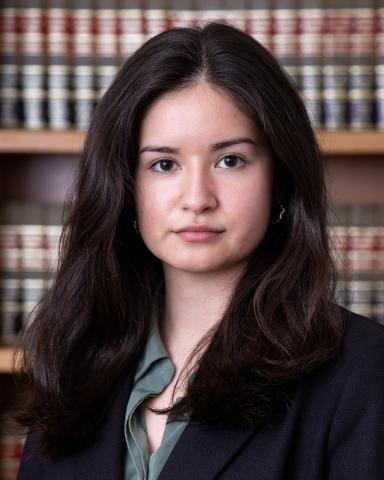
In this episode of Counseller’s Corner, Dean Jeremy Counseller talks with 1L Hope Arrendondo, whose dream of becoming a lawyer began at age ten and never let go. Hope shares her passion for prosecution and public service, her vision of being a “friendly neighborhood Spider-Man” kind of lawyer, and how her journey led her to Baylor Law. Her story is focused, driven, and sure to inspire.
Watch This Episode on YouTube
TRANSCRIPT
Jeremy
Hi! I'm Jeremy Counseller, Dean of Baylor Law School. Welcome to another edition of Counseller’s Corner. And today, my guest is Hope Arrendondo. Hope, welcome. And how are you doing?
Hope
I'm doing very well. Thank you.
Jeremy
Okay. So, my understanding from my extensive research and preparation for this interview is that you have wanted to be a lawyer for a long time. Can you tell me when you knew that you wanted to be a lawyer?
Hope
Yes. So, I know lots of people have this exact same story, so it's not very unique. But I think I remember being around ten and my parents, my mom, said, if you're going to argue so much, you might as well be a lawyer. And at that point, I was good at reading, writing. I think government was a big thing for me because that's how, you know, historical figures, George Washington, presidents, very impressive people that make the world that we live in.
as like, yeah, I'll go to law school. I'll do that. And so that's what I kind of focused my life on. And it's going to be a little scary. Graduating and being like, well, what now. But, yeah, it's always it's been my path and I'm glad that I've stayed on it.
Jeremy
So, did you come to law school straight from undergrad?
Hope
And so, I did one year at the Travis County Attorney's office, and to anyone that's listening, they've heard me say that phrase many times because that's where I really found my ‘where am I going in law’, specifically in prosecution. I would love to start at Travis County, so I don't really make any big mistakes. And then, the Travis County DA's office would be my next step.
Jeremy
Okay. I have a similar experience with my own parents when I was about eight, nine, ten, maybe even younger, that they would say, you know, you can be a lawyer one day, but right now you just shush. We're tired of arguing with you. And I'm wondering if, when, so far in law school because you're a first-year law student, if there's been less arguing than you anticipated.
Hope
I know that some professors, they do go out of their way to say, okay, Miss Arrendondo, I know you're going to be the defendant's counsel. And then, Mr. Russo, you're going to be the plaintiff. What are you going to argue? It's not really a ‘Your Honor’. Well, Meyer does say that ‘Your Honor’, but it's more of a what topic are you going to go for, like, what defense are you going to use?
You know, it's going to be mitigation. But it's not really a stand up and tell the class. It's more of, use this topic and apply it. And I think I do prefer that because seeing what the practice court students are doing, you definitely need more of, more experience, you know, practical before going into it.
Jeremy
Yeah. Yeah. It's also, when I went through law school, it's a lot more technical than what I anticipated would be. It's not all, I'm passionate, you know. There's a place for that for sure. There's a place for passion and sincerity. But, it's, there's also a lot of study and a lot of getting into the details of the case law and the statutes and the rules.
And a lot of it's very, almost mathematical. So, you tell us where you went to undergraduate and what you studied.
Hope
Yeah. So, I went to Texas A&M. Had a great time. I know that we hear a lot of, oh, is that a cult? Yes, it is. It's a wonderful cult. I'd go back a million times. And I did the pre-law track. I had already known that I wanted to go into law school. And I really liked it.
I think that a lot of pre-law degrees at other schools, they try to teach you a little bit of contracts, a little bit of property, and one of my, mentors actually headed the program, and he was like, we don't want you to know anything law based. They're going to teach you that in law school. We're going to teach you philosophy.
We're going to teach you logic. We're going to teach you, like get another degree, go do business statistics, like find what you want to do. And then so when you're ready to apply, you can say, these are the ABA statistics that we know that law schools are looking for. And we know that we taught you how to do that.
And it was I wrote about my personal statement. It was a really, really great experience.
Jeremy
So, you mentioned the desire to become a prosecutor. And that's a obviously public service. What is it that draws you to serve public service? But I guess more specifically to be a prosecutor?
Hope
Yeah. So, I had known from the beginning that I was going to be a lawyer. It wasn't going to be, and not to judge people that make lots and lots of money, but it wasn't going to be using my skills that I'd acquired, the blessings that I'd been given from my parents, to make rich people richer.
I really wanted to give back to the community specifically in government. And I remember I was in an internship during my undergrad years, at Travis County. I got to go back to work, and I was in court nine. And I just saw a lot of people that knew they had made a mistake. And I specifically, Travis County is a lot about rehab.
A lot of pretrial diversion stuff, a lot of getting you back on track. Like knowing this is affecting your life. You drove drunk. We caught you. And we don't want you to do this again. But we're not going to stop you from being a member of society. And so, I really wanted that, like, to be like a friendly neighborhood Spider-Man kind of lawyer, because that's the important stuff.
Jeremy
Spider-Man seems to have inspired a lot of people in their legal careers.
Hope
And you just talked to Austin about that?
Jeremy
I did. Yeah. I'm a little bit concerned about the influence Spider-Man has over Baylor Law students, but, but there are worse superheroes and super villains to pick from I suppose. Okay, so are you, do you think you'll be a prosecutor forever, or is it a means to some other, a step to something else?
Hope
No. So the mentor that I had from Travis County, she'd been a prosecutor for 35 years at Travis County. She loved it. She's amazing. Professor Alpert, who is the crime law advisor? He was a prosecutor in Tarrant County for, I think, 34 years. He loved that. He was an incredible, incredible, prosecutor. I knew that I wanted to go into public service, specifically public representation.
Maybe House of Reps., maybe the Senate, specifically in Texas, because, again, friendly neighborhood Spider-Man kind of vibe. Because, there aren't a lot of people like me. They're talking about people like me in our government. And I would love to do that. I would love to have constituents and represent them. And, you know, give back to the community that I'm in.
Hope
And then eventually, I in undergrad, I had an amazing mentor who was a lawyer, and he told me, do not go to law school. And now I understand why he said that. But he was in insurance for a while, and then he became a professor, and he loved it. And he inspired me. So, I had, first of all, that, okay, I want to go back to undergrad, maybe make a few kids go to law school to be tormented as I am.
And now I'm thinking, you know, Baylor, as you could possibly say, speak to, Baylor’s probably a pretty good place to teach. I don't know if they take me, but, Yeah, I think ending it as a professor would be incredible.
Jeremy
Together, there are opportunities to teach at law schools, you know, full time, obviously, but also part time, you know, that you keep your career going and you come in and you teach a course, you know, once a year, twice a year, those there's lots of opportunities for that. And I do think that that's one way that lawyers give back to the profession is to train the next generation.
It could be mentorship in a firm or an agency. It can be more formally in a, in a law school. But I think that's a good, I think that's a good aspiration. I certainly have enjoyed the teaching that I do and feel like it's a way to, to make a difference. So, I guess the question I want to ask you is why Baylor Law School, and more specifically, what part of Baylor most resonated with you?
Because the students who get into Baylor have options. I mean, they have other choices. So, I'm curious what, what resonated with you about Baylor Law School?
Hope
Well, I will be, maybe a little more transparent. There are lots of incredible students here that could have been to, you know, different schools. This school was my, my dream school. I was at the bottom of the bubble, and I remember talking a lot to admissions about how this is where I really wanted to go.
My dad went to Baylor, for a little bit for his undergrad degree. He loved it. But I think that it really resonated with me and that I was in a lot, not a lot. Sorry. Looking at, observing lots of trials at Travis County, both during my internship and then while I was working there for a year, knowing how to do a trial as a prosecutor - surprise, surprise.
Yeah, that's a good skill. Go to trial of time. And then I came into the tour here.
And they told me how the practical style of the teaching, albeit torturous, would prepare me for exactly the thing that I wanted to do. And I know some people come because they want to know how to litigate with them. They're going to go into transactional. I can say that what I'll be learning in practice court, Hopefully from you again.
And then in civil procedure, I will be actually using it. And that is, that was very exciting for me to see a school that was going to be maybe less theoretical and conceptual and more get on the stand and tell me your argument. So I'm looking forward to that.
Jeremy
Well, further to your desire to become a prosecutor, you are currently the, you're in the leadership of our Criminal Law Society. You're the treasurer, I believe, talk about that organization and the things that it, that it does.
Hope
I would love to. So, first of all, Professor Alpert is heaven on earth basically, the friendliest guy, great fashion sense. If you go to his office, he always has the best chocolate. And that's a very superficial way to describe him but, there is genuine support for criminal law students here, that you don't normally see from the outside.
I know Baylor is very civil. And some people, they want to start prosecution to get that trial experience and then move on to maybe more civil things. But they're the best students, I would say. Daniel Whittington, Grace Neill, people that knock it out. They’re on the Dean's list every semester they've been here. They're on law review. They’re in multiple executive, you know, organization boards.
They're in crim law and they're on the board. And they're incredible. They're great writers, they're great speakers, they're great people. I know we do the crim lab boot camp. I know we have that criminal capstone that Professor Alpert teaches. We have connections with Beth Tobin, who is incredible. She's our other advisor. As you said, someone who stays in the workforce, but then comes back and obviously gives back in her voir dire camp.
I think that it's, it's the perfect practical training, and it is so, I'm so appreciative because I know that students just a generation away, they didn't have that. And so learning that it exists and like knowing that that's what I wanted to do, it was just so encouraging to see out of the sea of civil here, that there was, there was a place for criminal.
Jeremy
Yeah. We've added a lot of and thanks to Richard Albert, Beth Tobin and others, added a lot of criminal law specific training, just as we've added a lot of business and transactional specific training. But, yeah, it's you're I think those programs that you mentioned are fantastic. Okay. Now we've come to the lightning round.
Hope
Okay.
Jeremy
The questions are silly. Your answers have to be short. Okay. Would you rather explore space or the deep sea?
Hope
Space.
Jeremy
Why?
Hope
The deep sea sounds horrible.
Jeremy
Okay. What's your favorite board game or card game?
Hope
That's actually retired. Secret Hitler, off the top of my head.
Jeremy
I like that game too. If you want to find out who's a good liar, play Secret Hitler with them.
Hope
Oh, all you have to do is start screaming fascist, fascist! And you don't have to be good at lying at all.
Jeremy
And I know this is the lightning round, but I'm going to take a little point of privilege. Sometimes I'm stunned how good, I'm stunned by the people who are excellent liars. You know what I found out playing secret Hitler? My son's wife is an incredible liar, and I'm going to try not to be concerned about that. If you could only eat one cuisine for the rest of your life, what would it be?
Hope
Oh, my God, I can't answer that.
Jeremy
You have to. It's lightning round.
Hope
No. If I don't say Mexican. It's not Mexican. All right.
Jeremy
Does it? Does it feel treasonous not to say Mexican because we’re in Texas?
Hope
No, I'm Hispanic. No. It's Mexican. I’m going to say Mexican food. Yeah.
Jeremy
See, I said Italian, and I felt guilty for not picking Mexican.
Hope
Really?
Jeremy
I did.
Hope
Are you Mexican?
Jeremy
No.
Hope
I didn't think so.
Jeremy
But, I mean, I've grown up around Tex-Mex food. My favorite restaurants, my favorite meals are Mexican. But if I could only eat one thing, I think there's… It would be better for my health, I think, if I ate Italian.
Hope
Now and you could say, sorry to the lightning round, I apologize.
Jeremy
No, no, no. You go.
Hope
Mexican food is not Tex-Mex. Tex-Mex is wonderful. But Mexican does not have queso. It doesn't.
Jeremy
Yeah, you’re, you're right about that.
Hope
So, you know,
Jeremy
You're right about that.
Hope
It’s either or. I apologize, I'm going to say Tex-Mex.
Jeremy
No, that was a correct clarification. Because there's a thousand miles of difference between Mexican food and Tex-Mex.
Hope
Yes, exactly.
Hope
Have one. It's the cowboy hat, smiley face.
Jeremy
Well, that's, that's the same as somebody else’s. Okay, what's your dream road trip destination?
Hope
Oh my gosh, all of the, all of the natural, like the, the national parks, like in the western area. So like Nevada and California and, well, maybe like west to like Midwest.
Jeremy
Okay. That's a good one. What's a movie you can watch over and over again?
Hope
Rango. Have you seen Rango?
Jeremy
Is that the cartoon?
Hope
Johnny Depp lizard one?
Jeremy
Okay.
Hope
It is so introspective.
Jeremy
I got to tell you, I'm not going to watch that movie.
Hope
That's okay.
Jeremy
Okay. If you could be on any game show, which one would it be?
Hope
Oh, I don't watch a lot of game shows. Not jeopardy, because I would embarrass myself.
Jeremy
Okay, we'll just eliminate one.
Hope
Yeah.
Jeremy
What's your favorite spot to study? Could be the library. Could be a coffee shop or somewhere else.
Hope
That's a solid split. And I will say I'll bring up Austin Lolamia one more time. I'm a library girl. Absolutely. But we went to Dichotomy recently, and it is perfect and it's the perfect spot.
Jeremy
There are a lot of coffee shops in Waco. There's tons of coffee shops in Waco. And, and dichotomy is a good one. That's kind of a fancy, fancy spot. You can feel very sophisticated.
Hope
It's third wave, apparently. That's the label.
Jeremy
What does that mean?
Hope
I have no clue.
Jeremy
Third wave. It's a third wave coffee shop?
Hope
Third wave coffee shop. Okay. It's also a bar. They serve alcohol the whole day. Not that I’d know.
Jeremy
This is Baylor. So, we'll have to edit that out. Okay. I understand you have a question or two for me.
Hope
Yes.
Jeremy
Okay. Go.
Hope
I will just ask you one because I think you'll be so interested. So, I know that you're…
Jeremy
You really shouldn't build things up so much.
Hope
It'll be fine. I, I… It's about you, so.
Jeremy
Oh, well.
Hope
Very interested. So I remember coming; not coming for the first time but stalking all my professors. And obviously, you're the Dean. You're the first one on the staff list. I have to go to you first. Right? So, you had all your career experience and you started as, a DA, assistant DA?
Jeremy
No, no, no. I started civil, I started as a clerk to a judge.
Hope
Okay.
Jeremy
Then I went to…
Hope
My apologies.
Jeremy
Civil practice. Oh. That's okay. You don’t have to know my bio.
Hope
I thought I did okay. I thought I saw district attorney on there, and.
Jeremy
I did for a very short period of time.
Hope
Okay, okay. So, there's that. I know you were a clerk. And you’re a judicial clerk. Excuse me. And then you were in energy, and I, I'm not sure if it was energy plus corporate or energy, then corporate.
Jeremy
Just litigation.
Hope
Okay. And then now you're in education. Obviously you've been in it for a while. So from all of the, albeit incorrect, descriptions I've given of you…
Jeremy
are basically right
Hope
of your career, and it’s a cop-out if you say education because you’ve been doing it for the longest, which one would be your favorite and why?
Jeremy
Education.
Hope
No
Jeremy
No, I will... Okay, I'll answer your question. I'll put this as, but I love what I do. I will say my, I'm, and I'll pick among the other things I've done as well. Not to cop out in your words, but I love doing what I do. I love the fact this for me, the transition into the Deanship has been fantastic, largely because of the people I get to work with.
I mean, they, they do things that make me look good, and I didn't have anything to do with it. And so, I will get credit for it and then have anything to do with it. And I, I try to always remember to give them credit, but, you know, you benefit from the wonderful people you work with and their, their hard work.
But the teaching part, which, because I've only been the Dean for a year, but the teaching part is something I've done for over 20 years. And the thing I can say about teaching is I have never once thought about a problem that I have while I'm teaching. For me, I, it is. it is one of those rare moments where I am absolutely present.
Nothing is distracting me. So, it's a kind of a form of meditation and a form of prayer, almost. Now when I walk out of the classroom, my problem is waiting for me. Whatever the challenges of that day, whatever I'm concerned about. So. So teaching is something that's really, really special. And that's my, those are my favorite things.
Now, among the others, I will have to say I like them all. And again, I'm not going to cop out. I liked all of them. There were there were positives of each one and each one of those things. So whether I was, you know, my six-month stint as an assistant district attorney or working at, the law firm at the time was called Bracewell and Patterson's, now Bracewell, or, being a judicial clerk, all of them had some things.
I'll say this is, of, of these jobs, this one is best for this reason. But if I had to choose, I would say, being a judicial clerk was fantastic. I mean, the one is, it's not a long commitment. I mean, I was a year stint, that's all there other one year or two years, and now almost all of them are just one year.
You know, because you get to see behind the scenes a little bit, you get to see how a judge thinks about cases. And it's not, it's not exactly the way you think about it when you're coming in from law school. And we, I think, law students, when they're new lawyers, they tend to have, and I certainly did, to be a little mechanical in our, legal analysis.
And I think judges often are more elegant in their legal analysis. And just to get to learn from my judge, to learn from my co-clerks, all of that was, was really, really positive. But I've been very blessed throughout my career. But in all the jobs, there are always hard days and there are always stresses. And I think one thing that I have learned to do, and the only way you learn to do this is to go through challenges, is that sometimes I think often times the stress, the anxiety you feel on the front end of a challenge on the back end, it's why you feel good about it when it's over.
Hope
Absolutely.
Jeremy
Those things are connected to one another. And, but it's hard to see until you've gone through those kind of professional challenges a number, a number of times. And it's not like I, I can't tell you that I hit a new challenge and I'm like, oh, I won't have any anxiety about this, but I have less than I would had I not gone through other challenges as well.
But overall, I am so happy with the course that I'm on and, and it's been a, being a lawyer, I always tell people there are easier ways to get rich than being a lawyer. I tell students this, being a lawyer is a rich and rewarding life, but it's not an easy life. It's a, it's a challenge. And I think people, I think one thing that, I think we do well at Baylor Law School, we're upfront about that.
And it's also, it also focuses us on what we need to do while students are here, is to prepare them for the challenges we know are coming. We know they are coming, and I don't think we would be doing our students, we wouldn't be doing right by our students if we didn't prepare them for those things as best we could, as best we could.
Hope it's been a pleasure. Thanks for coming in.
Hope
Thank you.