Contracts, Confidence, and Career Decisions: Claire Zurovec’s Path Through Baylor Law
Contracts, Confidence, and Career Decisions: Claire Zurovec’s Path Through Baylor Law
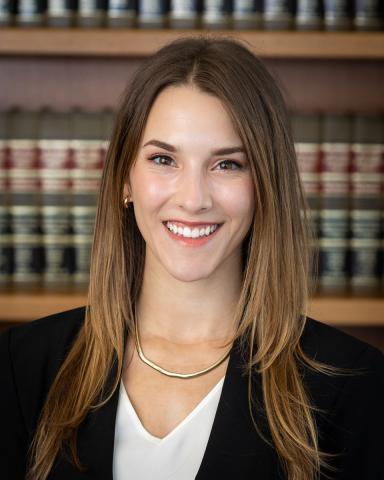
In this episode, Dean Jeremy Counseller sits down with standout Baylor Law School 3L Claire Zurovec as she reflects on her journey through law school — from conquering Practice Court with confidence to thriving in the world of corporate and securities law. They cover everything: which electives helped shape her career path, why transactional competitions matter, and how friendships and the Baylor Law School community leave a lasting mark. Plus, lightning-round fun reveals Claire’s go-to Waco hangouts, comfort food fixes, and which Jane Austen heroine she’d trade places with for a day. Whether you’re a prospective law student, a curious alum, or just someone who loves hearing how passion and preparation meet opportunity, this episode delivers insights and inspiration with heart.
Watch This Episode on YouTube
TRANSCRIPT
Jeremy
Hi. I'm Jeremy Counseller, Dean of Baylor Law School. Welcome to another edition of the Counseller’s Corner podcast. I am delighted to be joined today by Claire, whose last name I always mispronounce, Zurovec.
Claire
Zurovec. That's great.
Jeremy
Okay. Gosh, I finally got it right, Claire. Known you for three years now, and I'm finally getting your last name pronounced correctly. So, as I kind of look back at your resume, you, undergraduate education, and then what you've done here at the law school, you have done a lot of, kind of service stuff. For example, I think you were a student ambassador here at the law school. Is that right?
Claire
Yes, I was. I helped with the student ambassador program, where you kind of reach out to incoming students or prospective students and tell them a little bit more about Baylor Law and reach out to them.
Jeremy
Tell me more about that. Like, what exactly do you do?
Claire
So, we would get a list of students who, who had been admitted to the law school, who, they just wanted to kind of have a more personal touch reaching out to them. So, we would get a list of students that we could call and just offer that if they had any questions, they could ask us. Or if they just wanted to hear more about our experience, we were here for them, and I know a number of students I had multiple conversations with, even helping them find housing, stuff like that here in the area.
Jeremy
That's great. Well, you're, you're a fine ambassador for many schools. So, one of the things that you have spent a lot of your time doing here is both obviously taking courses in the transactional law area, but also involved in transactional law competitions. And transactional law competition, mock trial, moot court competition have been around for a long time. Client counseling, negotiations…
But the transactional law competitions are, by and large, a creature of the last few years. So, talk about what a transactional law competition is like.
Claire
Yeah, absolutely. So, this spring I had the pleasure of being on the team that competed at William and Mary.
Jeremy
How'd that go?
Claire
And I mean, it went well. We took home first place for both negotiating and drafting. So -
Jeremy
Congratulations.
Claire
Thank you. But so, the competition is a little funky. Like you said, people are more familiar with moot court, mock trial. In a competition, a transactional competition that has a drafting and a negotiating component, we spent a couple of weeks drafting a stock purchase agreement. So, it was for the acquisition of a small company. We’re given a little bit of facts about our client.
We draft on behalf of our client and the first draft. Then we receive the other side’s draft and we redline their copy. So, there's a lot of drafting that goes into the competition before we even get there. And then when we get there, we sit down on the other side of the people we've been drafting with, and we do a live negotiation in front of an audience.
Basically, a couple of judges will be listening to us as we work our way through the agreement and kind of nail down some of the deal points.
Jeremy
So, are you graded on the draft or the negotiation or both?
Claire
Both. Yeah. So, I know, I think the drafts were a pretty significant portion of the scoring. And then the negotiations was a separate score.
Jeremy
I think you, you and your partner won both best draft-
Claire
We did.
Jeremy
and best negotiation, right? So, it doesn't really matter how they score. You won it either way, I guess. So, congratulations on that. How do you feel like, so obviously you, you're learning about that area or those areas of law and you're learning some of the skills before you go into competition.
But how do you think? Well, let me ask you this way. What role do you think participating in that competition plays in your education?
Claire
I think that, that competition in particular, especially because it was a merger, or a form of merger, really was a good way for me to put all of the pieces together and then factor in client specific information. I had taken mergers and acquisitions here at Baylor already. My coach was the same professor who taught me in that course, and so I was really able to take it out of the classroom and into a more real life setting and actually put all of the provisions together, see how they interplay with one another, and then take that to a negotiation table, and see kind of what you can do with the document.
It kind of brings it to life a little bit.
Jeremy
One of the things I'm really proud of about our transactional law competition teams, but all of our competition teams, is we really try to involve as many students as we can in those competitions, because we think it's such an important part of the training and education we provide here. I think a lot of students feel like that's the light bulb moment.
That is where it all sort of all comes together. And I'm glad to hear that you had that similar experience. When you came to law school, maybe right before you came to law school, did you know that you wanted to be a transactional lawyer as opposed to a litigator or some other type of lawyer?
Claire
I did know, so I don't know that I had the vocabulary necessarily for what it is I wanted to do, except for I knew I did not necessarily want to do litigation. So, I came in. The way I've kind of explained it is, my dad is an attorney, and his or his practice has been more transactional. So, for me, growing up, when I thought of what an attorney does, I don't think of the courtroom dramas on TV.
I think about my dad. And so, I kind of knew that that's the path that I was more interested in going down. And then as I finished my first year, the word transactional law is still kind of this very vague,
Jeremy
right
Claire
term. None of the classes that you take first year, really -
Jeremy
It's an umbrella term for lots of different things.
Claire
Exactly. And so my first summer internship, I think, really helped me narrow that down a little more specifically to corporate law.
Jeremy
Corporate law?
Claire
Yes. And then corporate and securities was the practice group that I was with. And then the second year was just a full transactional ramp up. I had my transactional quarter, and it was really intentional with my electives. And so I went into my second summer with what I felt like was a very, much more robust vocabulary for what I was doing.
Jeremy
Talk about you mentioned our transactional quarter. Talk about what that is.
Claire
So in your fourth quarter of law school here at Baylor, and you take tax it’s tax and accounting principles for lawyers, and then you take business organizations and you take trust and estates. And so those three classes have a more transactional slant towards them. And then I also took the transactional drafting course, which was an elective. But I just chose to take it at the same time.
Jeremy
Yeah, these are sort of the basic foundational courses. And then there are electives and things you can take if that's the area you want to go into. And as you said, it's fourth quarter, the beginning of your second year of your school, where that where that happens. I'm curious, you knew you didn't want to be in litigation. You might, you said you might not have had the vocabulary say, this is what I want to do corporate and securities, which is totally understandable, means most of us come to law school with an incomplete picture of what it actually means to be a lawyer.
I'm wondering if you took any courses in law school where you said, I'm surprised that I'm interested in this?
Claire
Practice court.
Yeah. Yeah. I actually really enjoyed my experience in practice court. I liked what I learned, and I'm glad that I did.
Jeremy
Just pause you real quick.
Claire
Yeah.
Jeremy
Practice court is not transactionally focused. It's, it's focused on litigation. There's, there's some transactional pieces, but mostly it's litigation. So anyway, sorry to interrupt, but go ahead.
Claire
Yeah, absolutely. Yeah. So I think I was shocked by how much I did enjoy my experience in practice court. And that's not to say that it wasn't very hard and very challenging, but I think I came away with just a bigger appreciation for kind of what the other kind of lawyer does. And so I'll have that going forward into my career.
And I think that'll be really helpful for me.
Jeremy
Did you? Because I would assume by the time you went to practice court, you already knew you were going to be a corporate and securities lawyer.
Claire
Yes.
Jeremy
And you're so you surely sometimes at least you're viewing your experience in practice court through that lens. I'm wondering if you thought, this is how this could benefit me as a corporate and securities lawyer.
Claire
I think there are more specific ways I was able to think through that. So, for example, when I'm contract drafting, now, I actually do kind of think through like, if you had to prove this at trial, what are the elements that you would have to prove, you know, is this really a remedy? Would this really be a breach?
You know, kind of thinking through those more litigation specific things. But to me, the biggest benefit of practice court was the confidence boosting. And I think that that will have like the biggest, my biggest takeaway from that experience is just I went in to practice court; so I would say insecure about my ability to stand up and just do something that I don't know how to do.
And I walked away feeling much more confident that, you know, when you don't really have a choice but to do it, you figure out a way to do it.
Jeremy
Yeah, it is a big confidence booster. Ultimately. I mean, it can be difficult to go through the process. But, you know, my big takeaway from practice court was, I can do more than I thought I could. And I think that's helpful for a lawyer in, in any practice area. Well, I'm glad you, you felt that way about, about practice court and and were surprised. My, just as a personal thing, the course that I was most surprised that interested me when I got to college, I was dreading it, was tax.
Claire
Yeah.
Jeremy
I really like the tax court.
Claire
I did too, but it didn't surprise me.
Jeremy
Yeah. No, it didn't surprise you because it's like, it's all, all of these tax laws are trying to get you to do something or get you to stop doing something. And it's all floating on this policy, the sea of policy that's really interest. And some of it's makes sense and some of it doesn't. It seems like good policy and some of it maybe doesn't to an individual.
But that was the course that surprised me that I really liked. So, tell me you, what advice would you have for law students who are coming, maybe to law school, maybe, maybe to Baylor Law School, but just also law school somewhere and who are interested in a transactional practice. And as you rightly pointed out, that's an umbrella term.
It could mean mergers and acquisitions, corporate and securities. It can mean lots of different things. A discreet practice here. But what advice would you give them in terms of how to be well prepared or as well prepared as you can be for that kind of practice?
Claire
Yeah. So my Baylor specific advice, because we have the special distinctions, is to use that as a framework for what electives to take.
Jeremy
Talk about the special distinctions. What is that?
Claire
Yeah. So, Baylor has, their own, it reminds me at least of like an undergrad major where you can kind of pick a certain area of practice and there are special distinctions, and then there's tracks. The special distinctions have slightly more hour requirements in order to achieve. But they tell you, you have to take a certain number of credit hours from this list of classes, this list of classes, and this list of classes.
So I use that as my model for what electives to take in my second year. And you know, I was ultimately able to complete it. But even if I for some reason wasn't able to complete it, I was still going to be happy that I had that guide. So, I think finding some sort of plan or guide for what classes kind of go well together and lead you down that path.
And then the business side bootcamp, I also did. And I think that one week program where you just have a very intensive focus on many, many different areas of business all right before I started my second summer, and right after I finished my very transactional, heavy second year was just kind of like the cherry on top to send me out the door.
So yeah.
Jeremy
So, the, you mentioned the distinctions in the tracks. No one has to complete one. But as you say, it's certainly a good guide. If you figure out I'm interested in this practice area, it's a good guide of courses to take to get you prepared for that, that practice area, even if you don't end up complete. I mean, if you do, will recognize you at graduation for having done it, but it's a, it's a very good guide.
And I agree with you. It's sort of like a concentration or a major that's optional for you in, in law school. So, talk about your, your coming to the end here, Claire. Thoughts as you reach the end of your three years of law school, I imagine when you start law school, it seems like a long, hard slog.
Like even three years is a lot of time when you're - you've graduated college, you could get a job, you could be out there working, and then you start law school. It seems like a long time. How does it seem to you now, looking back on your three years in law school?
Claire
Well, looking back, it really doesn't feel like it's been that long. So I'll say that right off the bat. I think there are periods that feel long, you know, like weeks will feel really long, but then months will go by really quick. So just things like that, if you're kind of concerned about, you know, if you're thinking about going to law school and you don't know if you can take three years off or feel like you have this three year delay.
The way I viewed it was I could get out and get a job, and I was probably going to have to work my way up the ladder for three years, or I could go to law school. And that kind of is working my way up the ladder into a career that I'm, you know, find fulfilling. And so to me, it wasn't really like a delay or holding me back in any way to have to go to school for three more years.
I saw this kind of like a just an alternative path to maybe reach the same level, in my career, that I would be at if I had just gone straight.
Jeremy
What other than, other than the education and the training, is there anything about law school, did you look back on and you say that's something I'm going to carry with me. I don't know if it's friendships or relationships or things like that?
Claire
It's, it's absolutely friendships. I have had the most wonderful friend group here. You know, the community overall at Baylor is really inviting, and it's such as, like a close, tight knit community. It's a smaller community. And I really, that's appealed to me when I was picking law schools was that, I remember when I came to just visit Baylor, I sat in on a class and Katherine Sims, one of the student admissions at the time, she was in student admissions, knew students in the class by name.
And my dad was with me, too. And that stuck out to him. Is that you're going to a school where, you know, the staff, the faculty people know people by name here. And so that.
Jeremy
Even if we sometimes mispronounce.
Claire
Those even.
Yes.
Yes. But people know people by name and, they, that kind of close knit community. But then within this community, I found a really, really tight group of about ten friends that will be with me for life. Yeah.
Jeremy
Same experience, same experience.
Claire
Yeah.
Jeremy
So, talk about what the next step is for you after graduation.
Claire
So, after graduation, I'll be going back to Austin, which is where I'm from. I was born and raised there, and I am going to go to Jackson Walker, which is a firm in Austin, and I'll be back in the corporate and securities practice group.
Jeremy
That's outstanding. It's a great firm.
Claire
Yeah.
Jeremy
Great, great city, great firm. And I think you're going to do a fantastic job. As, as an attorney, Jackson Walker is, is lucky to have you. Okay. Now you may know we have a lightning round.
Claire
Yes.
Jeremy
I had to pause to insert the lightning sound effect. Okay. Oh, gosh. These have been these have been changed without my knowledge.
Okay, here's question one. With Baylor bringing more concerts to foster and McClane, which artist or band would you love to see perform in either McClane Stadium or Foster Pavilion?
Claire
Oh gosh. So, I would say it's a smaller band. Well, artist, his name is Shakey Graves and he's from Austin. He's performed all over, but he'd be great.
Jeremy
That's an excellent answer. Favorite childhood TV show or movie?
Claire
Childhood TV show? Gosh, I guess I'll just go with favorite movie then. Beauty and the Beast. Always my favorite. Yeah.
Jeremy
Favorite hangout spot with a friend or two in Waco?
Claire
Lately we've been going to Lighthouse quite a bit.
Jeremy
Where is Lighthouse? I keep hearing about Lighthouse. Where's Lighthouse?
Claire
It's on Washington and about Eighth. Right there by Patrick's Dry Cleaner.
Jeremy
Okay.
Claire
Downtown. Yeah.
Jeremy
Okay. I have to check it out. If you could be any fictional character for a day, who would it be?
Claire
Oh goodness.
Jeremy
Yeah, I really should have reviewed these questions before we started this podcast. But now it's the lightning round and you're stuck with your characters.
Claire
Let's see, I’d pick a character from a Jane Austen novel.
Jeremy
Mr. Darcy?
Claire
Not Mr. Darcy, probably Elizabeth.
Jeremy
Okay, what's your go to comfort food when you're having a rough day?
Claire
So I go to Clay Pot, and I get their vermicelli and their spring rolls.
Jeremy
That's also an excellent answer. I like Clay Pot a lot. Okay, I understand you may have a question or two for me.
Claire
I do.
So, we talked a little bit about practice court and we talked about kind of the rise of transactional law competitions, and I was wondering if, in the future of Baylor Law, is it within the realm of possibilities that there might be some sort of transactional practice court equivalent? But, I want to have a caveat there that I don't want to say that you wouldn't do practice court.
Jeremy
Yeah.
Claire
It'd be almost like you did the first part of practice court, and then maybe the second part, a big trial. Maybe you did intensive...
Jeremy
Well, I don't know exactly what shape it would take, but I can tell you, I, I love the transactional quarter, as it's informally called around here, as we've talked about it. I love the idea of beefing that up. I love a transactional counterpart to practice court. I like that a lot. I think it's important that we continue to improve the education and training we provide in, in every area, but certainly a focus of mine.
And I think the faculty's focus is what can we do to improve our transactional law program. I think that's a team effort. And, you know, the whole faculty, that's a curricular decision. But, I think in your first few years of practice, you know, I think you're going to see us do even more than we already do in that area.
I mean, what, what heartens me so much is,is people like you who are out there going to William and Mary and doing a fantastic job against other great students from other great law schools. And, that's, that's the proof of our training to me and how well our students are doing in those competitions. And so I'm for, to me, we're seeing a return.
Let's, let's invest more. And then I think you're going to, you're going to see, I don't know what we'll call the program, but there will definitely, I think in the near future, be something equivalent to to practice court, just as you were saying, practice court is going to benefit you as a corporate and securities lawyer. A transactional counterpart would benefit litigators as well.
Claire
Yeah.
Jeremy
You know, there's, there's deal drafting even for litigators. I mean, all litigators have at least drafted a settlement agreement and other sorts of things. And I think that kind of training can benefit all students.
Claire
Yeah, definitely. Well, I'm excited to hear it. Good to see.
Jeremy
Thank you so much, Claire. You are going to be, you're going to make us really proud here at Baylor Law School. And all the best in your future endeavors.
Claire
Thank you so much.
Jeremy
Thanks, Claire.