

More Than a Case File: Baylor Law School Students Encounter Justice in Zambia
Baylor Law School’s partnership with Undikumbukire Project Zambia gave students the opportunity to step beyond the classroom and into another legal system, working alongside Zambian lawyers and law students while confronting what representation, service, and justice look like in practice.
Baylor Law School students spent a month in Zambia this summer applying their legal training to work involving children navigating the country’s juvenile justice system through a partnership with Undikumbukire Project Zambia (UP Zambia). UP Zambia works with children who lack legal representation or have a limited understanding of the proceedings around them.
Students reviewed case files, helped prepare arguments, and interviewed children about their circumstances. At times, their work involved questions that were as practical as they were consequential: Who knew a child had been arrested? Could a parent or guardian be located? What information was still missing from the file?
Because Baylor students are not trained in Zambian law, they worked alongside the Zambian attorneys and law students who are. The arrangement allowed students to contribute their legal training without losing sight of their role as visitors to another country’s justice system.
For Dean Patricia Wilson, the opportunity carries a familiar part of a Baylor Law School education well beyond Waco. “Experiential learning for us is nothing new,” Wilson emphasized. “It’s always been part of the Baylor Law School model.”
In Zambia, students gained firsthand experience navigating a different legal system. They discovered how the application of law can be influenced by the people involved and the resources available for its implementation. Professor Brian Serr pointed to a broader lesson at the center of the experience.
"A justice system to work needs more than law,” Serr observed.
Serr noted that even practical challenges can slow a case, such as a missing file, an absent parent, or a shortage of lawyers and resources to advance the work. While legal protections may exist, making them effective requires individuals who can put them into action.
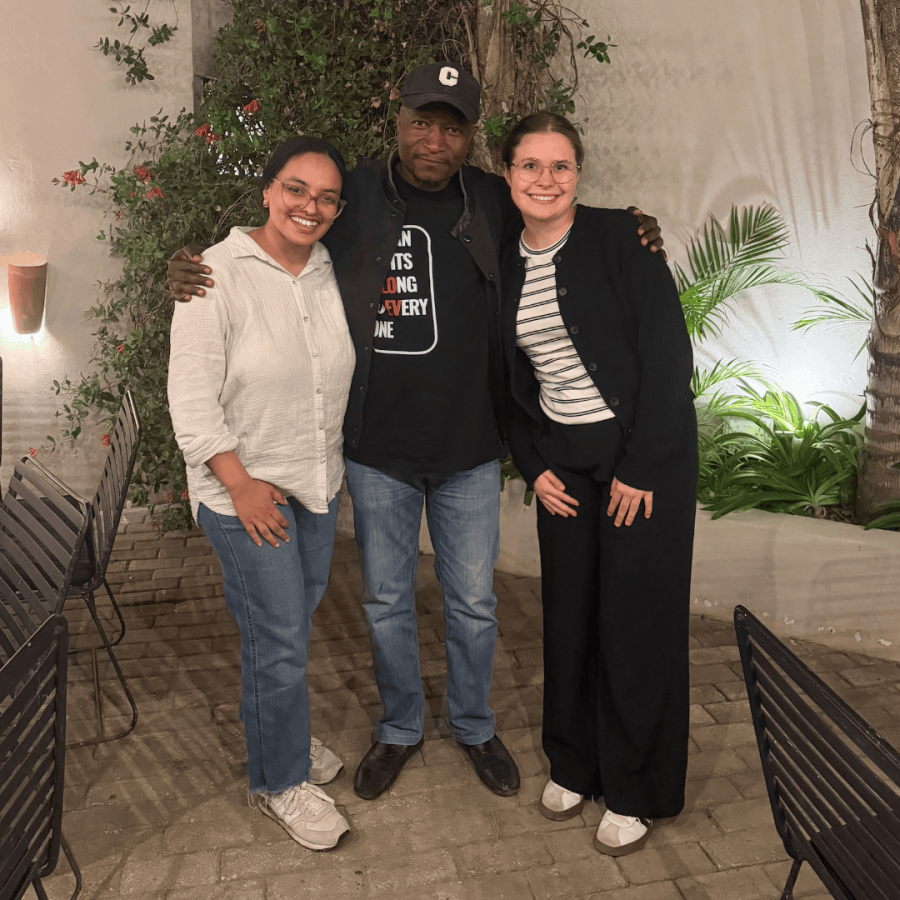
For 5Q Gianna Butler, that lesson became personal. She first encountered a 14-year-old boy through a case file detailing the accusations against him and the circumstances of his detention. Then she met him.
“He just had a baby face and was so kind,” Butler recalled. “He was just a kid.”
The accusations Butler read in the file appeared different once the person they referred to was sitting across from her.
Baylor Law School students joined work that was already in progress. Their role remained collaborative throughout the month. The cases belonged within the Zambian legal system, and UP Zambia’s work would continue long after the Baylor students returned home.
That position gave students a close view of a justice system different from their own. 6Q Malavika Ranjit was struck by the pace of Zambia’s subordinate court, where the speed of proceedings had earned it a nickname: the “Court of Ambush.” Watching cases move quickly prompted a different set of questions. How much time had the defendants been given to prepare? What information had they received beforehand? Did they understand what would happen next?
The experience taught her “not just to look at the facts like they’re black and white,” Ranjit reflected, but to consider the perspectives of the defense, witnesses, and the state.
Butler arrived in Zambia with one part of her future already in focus: she wanted to become a prosecutor. During a visit to a reform school, she spoke with a member of UP Zambia’s staff who had previously worked in prosecution. She asked why he had moved into defense work.
His answer stayed with her. Prosecutors, he told her, also have the power to recognize a bad case, respond when rights have been violated, and make sure children are heard and seen.
“I still want to do prosecution,” Butler reflected, “but I think I’m going to come out of this experience being a much better prosecutor because of it.”
That sense of responsibility is central to what Baylor Law asks students to carry into the profession. Wilson traced it back to the beginning of their legal education in Waco.
“We try to impress our students from the first day of orientation until the day they graduate that the legal field is one of service,” Wilson emphasized.
Not every lesson in Zambia came from a courtroom or case file. Students also spent time with children outside the legal work, playing chess and soccer, and bringing recreational items to places where there was often little for them to do.
Butler remembered the children singing and performing skits about what they hoped to become. One wanted to be a dancer. Another imagined becoming a police officer. Another wanted to be a pastor.
Those interactions gave students another way of understanding the children whose names and accusations they had first encountered on paper. A case file could document what had happened to bring a child into the justice system. It could not contain everything about the person living through it.
When the month ended, Baylor students returned to Waco while UP Zambia’s attorneys remained with cases that could extend far beyond the students’ time there. Butler carried home a different way of approaching the people behind the cases she may one day prosecute.
“I hope I always remember meeting those kids for the first time and realizing they’re more than a case file,” Butler reflected. “They’re more than their accusations.”
